
Ice Dams on Your Michigan Roof: Why They Happen and How to Stop Them
Ice dams form when heat escaping into your attic melts snow at the top of the roof, which refreezes at the cold eaves and backs water up under the shingles. The fix isn’t chipping ice off your gutters, it’s balanced attic ventilation, proper insulation, and ice-and-water barrier so the roof deck stays cold and even.
What an ice dam actually is
If you’ve seen thick ice building up along the edge of your roof and icicles hanging off the gutters, you’ve got an ice dam, and it’s one of the most common causes of winter roof leaks we see across mid-Michigan. An ice dam is a ridge of ice that forms at the eaves and stops melting snow from draining. The trapped water then backs up under the shingles and finds its way into the house.

Why they happen
Ice dams are a heat problem, not a snow problem. When warm air escapes from your living space into the attic, it warms the roof deck and melts the snow sitting on the upper part of the roof. That meltwater runs down to the eaves, which are colder because they extend past the heated part of the house, and it refreezes there. Repeat that cycle over a Michigan cold snap and the ice builds into a dam.
The homes that get the worst ice dams usually have some combination of poor attic ventilation, insufficient insulation, and air leaks from the living space into the attic. The roof deck ends up warm and uneven, which is exactly the recipe.
How to actually stop them
Chipping ice off your gutters every winter treats the symptom, not the cause. The real fix is keeping the whole roof deck cold and even so the snow doesn’t melt and refreeze in the first place. That means three things working together: balanced attic ventilation (ridge and soffit vents so air flows through), enough insulation on the attic floor, and sealing the air leaks that let warm air up.
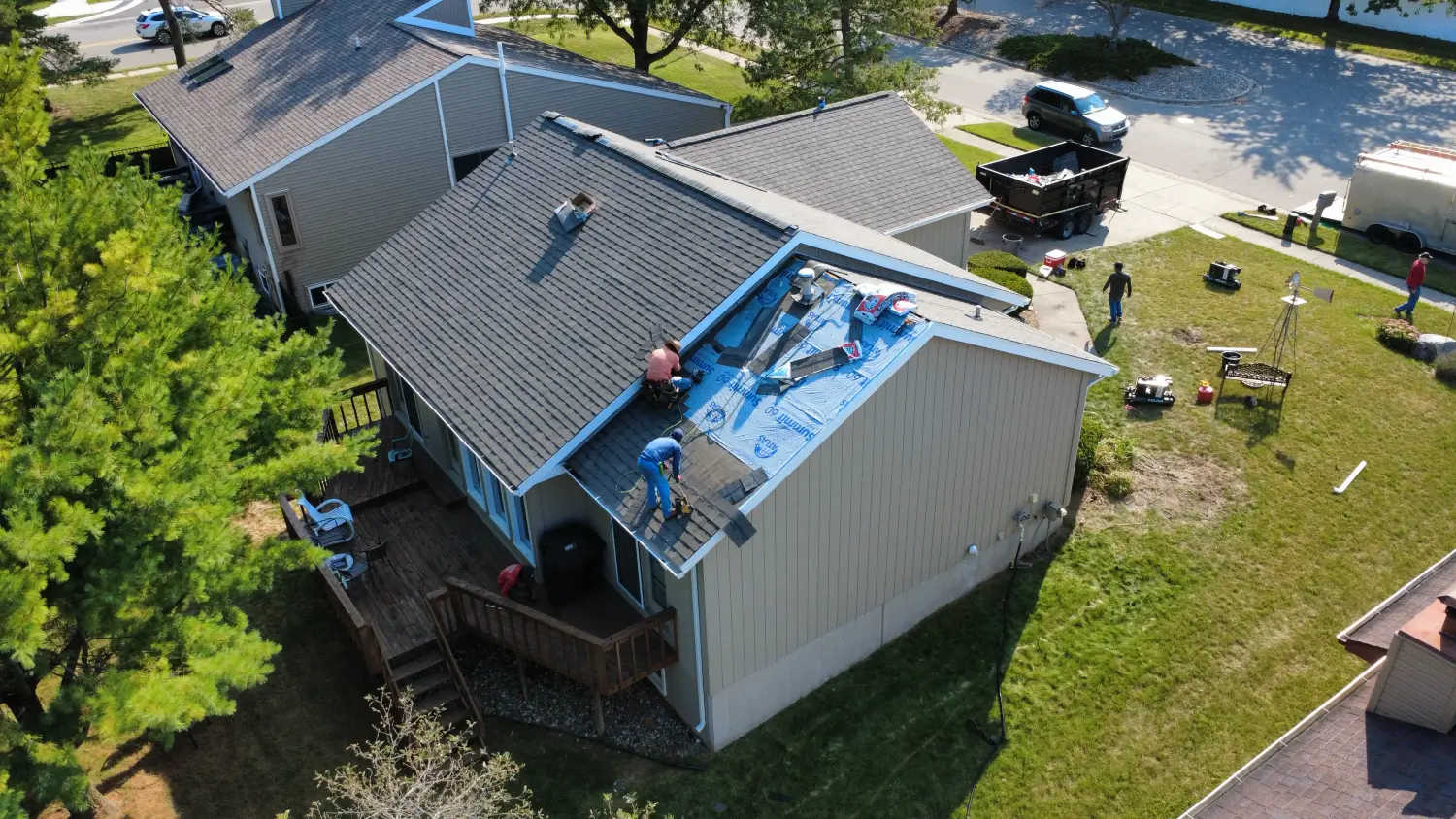
Under the shingles, ice-and-water barrier at the eaves and valleys is your last line of defense, it’s a self-sealing membrane that stops meltwater from getting into the house even if a dam forms. We install it on every roof, and it’s essential in our climate.
Ice dams form when heat escaping into your attic melts snow at the top of the roof, which refreezes at the cold eaves and backs water up under the shingles.
When to call someone
If you’re getting ice dams every winter, or you’ve had a leak from one, it’s worth having your roof and attic looked at. Often the fix is ventilation and insulation work rather than a whole new roof. We’ll inspect it, tell you honestly what’s driving the dams on your home, and recommend the least-expensive fix that actually solves it, because we don’t sell work your home doesn’t need.
What an ice dam does inside your walls
The ice you can see on the gutter is the least of it. When meltwater backs up behind the dam, it works under the shingles and finds the nail holes and seams in the roof deck. From there it soaks insulation, stains ceilings, and runs down inside the wall cavities where you will not see it until the paint bubbles or the drywall softens.
Wet insulation is the quiet cost. Once fiberglass packs down with moisture it stops insulating, which makes the attic warmer, which melts more snow, which feeds the dam. The house gets more expensive to heat and the roof gets worse at the same time.
If water has already come in, deal with the source before the finishes. Repainting a stained ceiling without fixing the ventilation and insulation above it just schedules the same repair for next winter.
The fix, in the order we would do it on our own homes
First, air sealing. Every gap where warm house air leaks into the attic, from can lights to bath fans to the attic hatch, is heat that melts snow on your roof deck. Sealing those leaks costs the least and does the most.
Second, insulation brought up to depth, so the attic floor holds the heat in the living space where you paid for it. Third, balanced ventilation, intake at the soffits and exhaust at the ridge, so the attic runs cold and the snow on the roof melts from the sun, not from your furnace.
Last, the roof itself. When a roof is due for replacement anyway, we run ice-and-water barrier well past the code minimum at the eaves and valleys. That layer is the seatbelt. You hope the rest of the system means you never need it, and you want it there the winter you do. If ice dams have been a yearly event at your house, have us look at the attic before anyone talks you into a whole new roof.
What the fixes cost, relative to each other
Air sealing is the cheapest item on the list and frequently the most effective, a day of unglamorous work in the attic. Insulation top-ups cost more but pay twice, once on the heating bill and once on the roof. Ventilation corrections usually ride along with either of those or with a roof job.
The expensive path is the one where nothing gets fixed: a ceiling repair every spring, higher heat bills every winter, and a roof that ages early on top of it. When we look at an ice-dam house we price the actual causes in order of return, and we will tell you plainly which fixes your house needs and which it does not. Plenty of homes need two of the four, not all of them.
One last winter note for the mid-Michigan crowd: the freeze-thaw swings we get around Lansing, St. Johns, and the I-69 corridor are exactly the pattern that builds dams fast, a sunny 34-degree afternoon followed by a 12-degree night. If your house has the problem, it is not bad luck and it is not the snow’s fault. It is heat escaping where it should not, and it is fixable, usually for far less than people fear. Call the crew at (989) 900-0018 and we will trace it honestly.
Common Questions
What causes ice dams on a roof?
Heat escaping into the attic melts snow at the top of the roof; the meltwater refreezes at the colder eaves and builds into a dam that backs water up under the shingles. It’s a heat and ventilation problem, not just a snow problem.
How do I prevent ice dams?
Keep the roof deck cold and even with balanced attic ventilation, adequate insulation, and sealed air leaks, plus ice-and-water barrier under the shingles at the eaves. Together these stop the melt-refreeze cycle that forms dams.
Is chipping the ice off safe?
It’s risky and only treats the symptom. You can damage shingles and gutters and hurt yourself on a ladder in winter. The lasting fix is addressing the attic ventilation and insulation that cause the dam.
Can ice dams cause a roof leak?
Yes, that’s the main danger. Water backed up behind the dam gets under the shingles and into the attic, walls, and ceilings, causing stains, mold, and rot if it isn’t stopped.
Do I need a new roof to fix ice dams?
Usually not. The fix is often ventilation and insulation work rather than a new roof. We inspect it and recommend the least-expensive solution that actually solves the problem for your home.
Want an honest look at your roof?
Call the crew for a free, no-obligation assessment. We’ll tell you straight up what your home needs.
(989) 900-0018 Or send us a note about your project →