
A few bad tabs is a repair. A tired roof is a different conversation.
Lifted shingles after a spring blow, meltwater backing up at the eave, flashing that quit years ago. We get on the roof, find what is really letting water in, and tell you which of those two you have.
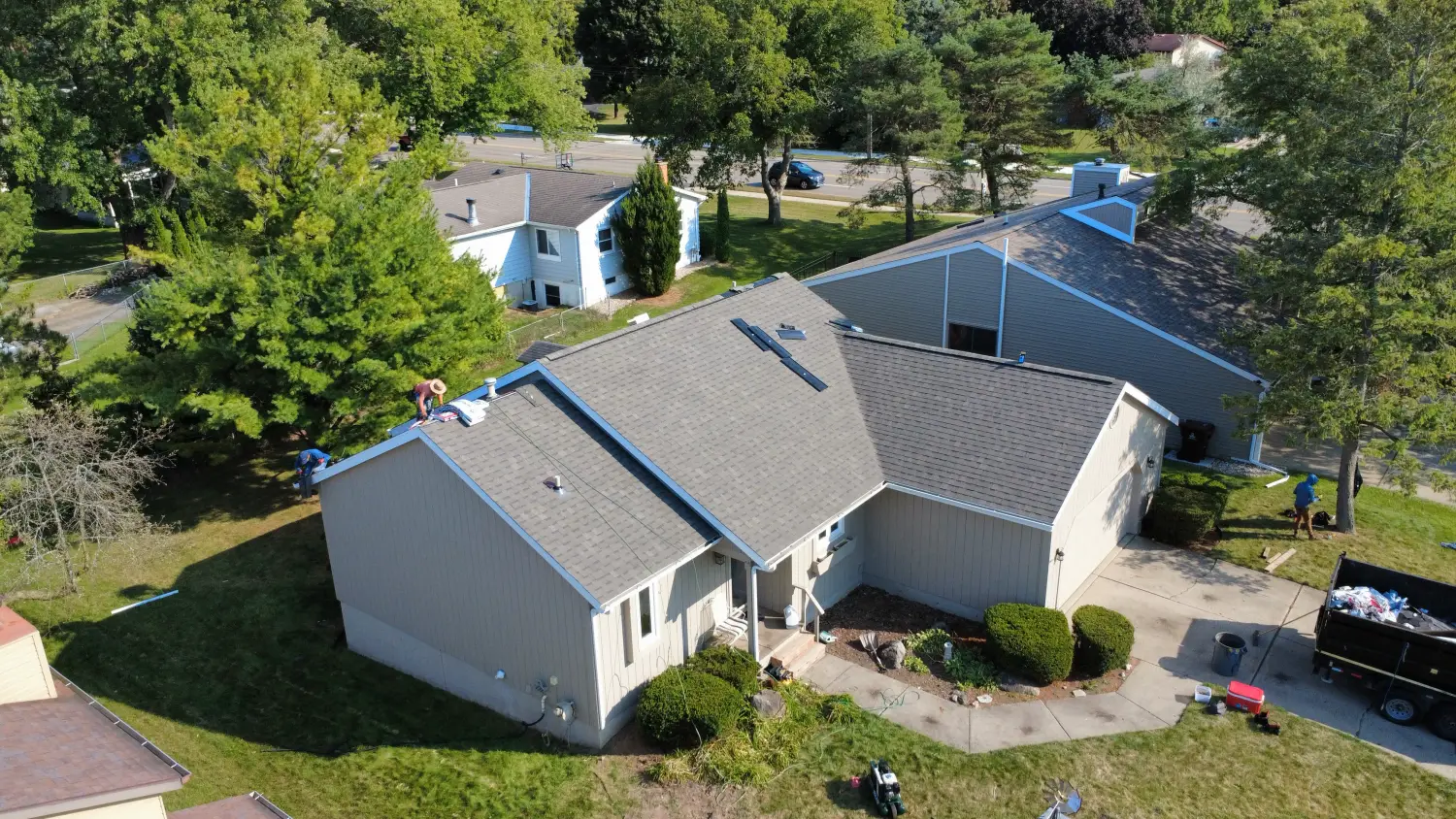
What a spring blow does to a shingle field.
The wind that comes through Haslett in March and April does most of its damage without taking a single shingle off the house. It gets under the bottom edge of a course, breaks the factory seal strip loose, and folds the tab back on itself. When it lays back down, the crease stays. From the driveway the roof looks untouched. Up close, that row is no longer sealed to the one below it, and the next hard gust starts working on the row above it too. This is why so many calls we take here begin with a homeowner saying nothing looks wrong.
Where the tabs let go tells us something. Along a rake edge and up near the ridge, the wind gets the most leverage, so those courses go first on almost every house. On the lakeside streets, where a yard opens toward the water and there is nothing upwind to slow anything down, a gable end can lose its seal across a whole run at once. On the tighter blocks with mature trees, the field usually survives the wind and the damage shows up as branch strikes and scuffing instead, which cost the shingle its granules in patches rather than lifting it.
Age decides how much of that matters. A roof putting on its first ten years reseals itself once the sun warms it back down, and a handful of creased tabs is a genuine repair. On the ranches around town still wearing shingles that went on decades ago, the mat has gone brittle, and a tab that gets folded in a spring storm cracks through instead of bending. Those do not reseal. We can replace them, and we will, but we say plainly how much of the roof is in the same condition so you are not surprised when the next storm finds three more.
We do the repair with our own licensed, insured crew, and we hand-seal every course we open so it holds through the following winter rather than relying on the sun to do it in July. Nobody else touches the job. The person who reads the roof is the person who fixes it.
Why the leak shows up in February, not January.
Ice-dam leaks are the ones that confuse people, because the stain arrives long after the weather that caused it. Snow sits on the roof, warm air escaping the attic melts the underside of it, the water runs down to the cold overhang past the heated part of the house, and it freezes there. That ridge of ice grows over a few days and the next round of meltwater has nowhere to go, so it pools behind the dam and creeps back up under the shingles. Shingles shed water going downhill. They were never built to hold it standing still.
Once it gets past that bottom course, water follows the deck to whatever seam it can find and comes through the ceiling near an outside wall. That is the classic Haslett winter call. The repair is the easy half: replace the wet or damaged courses and get proper ice-and-water membrane run up the eave so the next dam has nothing to exploit. The harder half is the reason the dam formed in the first place, which is almost always warm air getting into the attic and not enough ventilation moving it back out.
On the sixties ranches around here, that ventilation was considered adequate when the house was built and is not adequate now, especially after somebody added insulation without adding intake at the soffit. We look at the whole path when we are up there, because putting new shingles over the same conditions buys you one winter. If the answer is more ventilation rather than more roofing, that is what we will tell you, and it is usually the cheaper of the two.
The three places water actually gets in.
Almost none of the leaks we chase in Haslett start in the open field of the roof. They start where the roof meets something else.
Chimney flashing
A masonry chimney and a wood-framed house move at different rates through a Michigan winter, and the joint between them opens a little each year. Somebody usually answers that with a bead of caulk. Caulk lasts a season. We take the old metal out, cut fresh step and counter-flashing into the mortar joint, and let metal do the work it should have been doing.
Valleys
Every valley carries the runoff of two slopes at once, so it moves more water than anything else up there and wears out first. A valley that has lost its granules, or one that was closed-cut short of the centerline, will pass water sideways under the shingles on the shallower side long before the rest of the roof shows any age at all.
Penetrations
Plumbing vents, exhaust caps and anything else poking through the deck are sealed by a rubber collar that hardens and splits with UV. The shingles around it can be in fine shape. We check every one of them on the free look, because a split boot is a small, cheap fix that people live with for years without ever knowing it was the source.
Matching what is already on your roof.
The question we hear most before a repair starts is whether the patch is going to announce itself from the street. Honest answer: it depends on the age of what you have. We identify the brand and line already up there and match profile and color as closely as what is still made allows.
On a house from the last fifteen years, the match is usually close enough that nobody picks it out. On a roof that has faced fifteen or twenty summers, the existing field has lightened and the new shingles will sit a shade darker until they weather in over a couple of seasons. If the original color was discontinued, we say so before we order anything. And if the repair lands on a slope facing the street, we walk you through what it will look like first, because finding out afterward is nobody’s idea of good service.
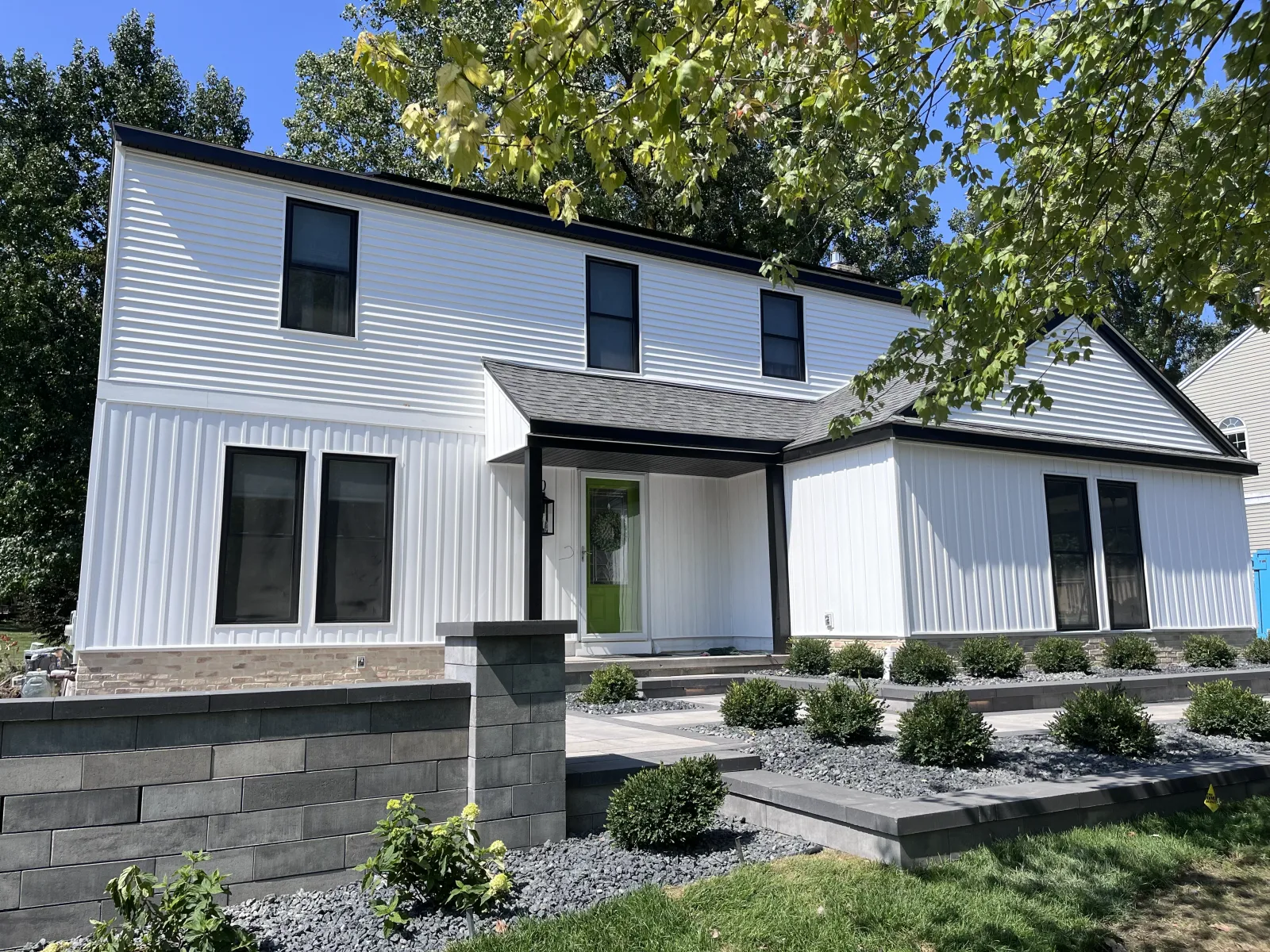
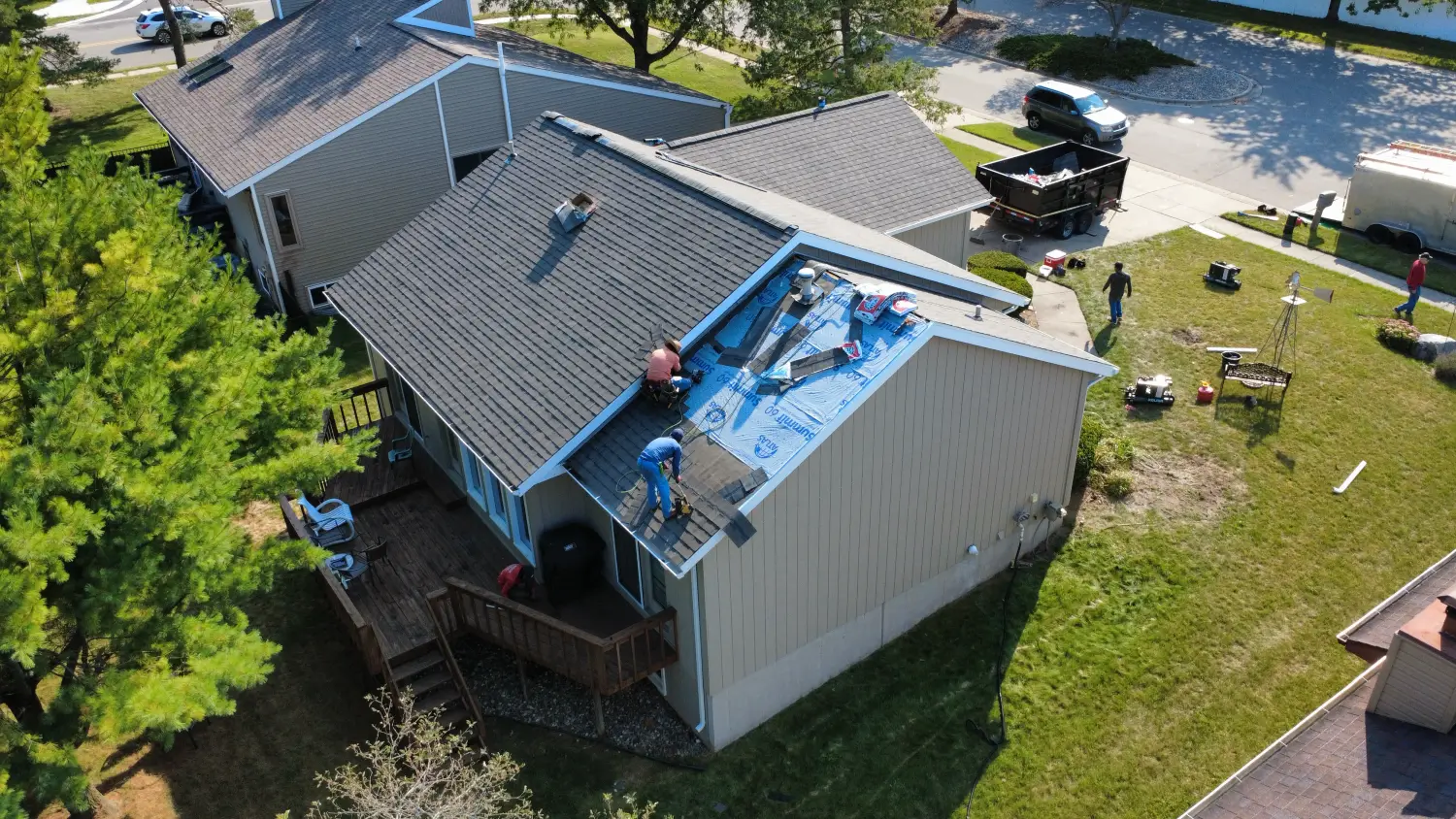

Also in town: metal roofing · siding installation · gutter replacement · storm restoration.
Read how we approach shingle roof repair everywhere we work, see every Haslett service, or call (989) 900-0018.
The inspection that settles it.
Every repair here starts the same way, with a free look that costs you nothing and obligates you to nothing. We get on the roof rather than judging it from the ground, and we work through it in order: the field and its condition, the valleys, the flashing at every wall and chimney, the boots, the eaves for ice history, and the attic underneath for ventilation and any wet decking. All of it gets photographed.
Then we come down and show you the pictures. You hear where the water is entering, how far it has traveled, what the rest of the roof has left in it, and whether a repair is the honest recommendation or money spent on a roof that needs replacing inside a year or two. If it is a repair, you get a written scope and a fair price in writing with the flashing and ventilation corrections named individually instead of hidden inside one number. If a storm did it, we document the damage and handle the claim paperwork with your insurer.
The reason we work this way is the reason Andrew, Aaron and Preston started the company. Too many homeowners get told they need a whole roof when a day of careful work would have carried them another decade. We would rather come back in twelve years for the replacement you actually need than sell you one today you do not. Book a free roof look and we will tell you which it is.
Repair questions we get from around the lake.
Plain answers, and finished jobs you can look through in our gallery.
The wind creased some shingles but none blew off. Is that worth fixing?
Usually yes. A creased tab has lost its seal to the course below it, so the next storm has a starting point. On a younger roof it is a quick repair. On a brittle one it is a warning that the field is done flexing, and we will say which of the two your roof is.
Water came through my ceiling in February. Where is the leak?
Very likely an ice dam at the eave rather than a hole overhead. Meltwater pools behind the ice and works backward under the bottom courses, then follows the deck to a seam near an outside wall. We trace it to the entry point instead of patching the spot above the stain.
Do you fix leaks at chimneys and in valleys?
That is where most of the leaks we find here begin. We replace failed step and counter-flashing in metal cut into the mortar joint, and we rebuild worn valleys properly. Sealant smeared over a gap gets through one season, and then you are calling somebody again.
Will a repair patch be obvious from the street?
On a newer roof, no. On one that has weathered fifteen or twenty summers, the fresh shingles read a little darker until they age in. We tell you before we order, and if the slope faces the road we go through the options with you first.
How do you decide between repairing and replacing?
Condition, not calendar age. If the shingles still flex, the granules are holding and the damage is confined, we repair and leave the rest alone. If the mat is brittle and shedding across the whole slope, a repair buys months, and we would rather tell you that than take the work.
What does the free look cost me?
Nothing, and there is no obligation attached. We inspect the roof, the flashing, the eaves and the attic, photograph what we find, and give you a fair price in writing for whatever the actual scope turns out to be. We do not price roof work from a photo or over the phone.
Get on the roof before the next storm does.
Call the crew for a free look at your Haslett home. If a repair will carry it, that is what we will recommend.
(989) 900-0018