
Most sagging, dripping gutters can be fixed right where they hang.
Pulled hangers, a weeping corner, a downspout elbow packed solid with grit. Our own licensed and insured crew repairs the run and checks the board it is fastened to. If a run is past saving, you will hear that from us before anyone sells you a new one.
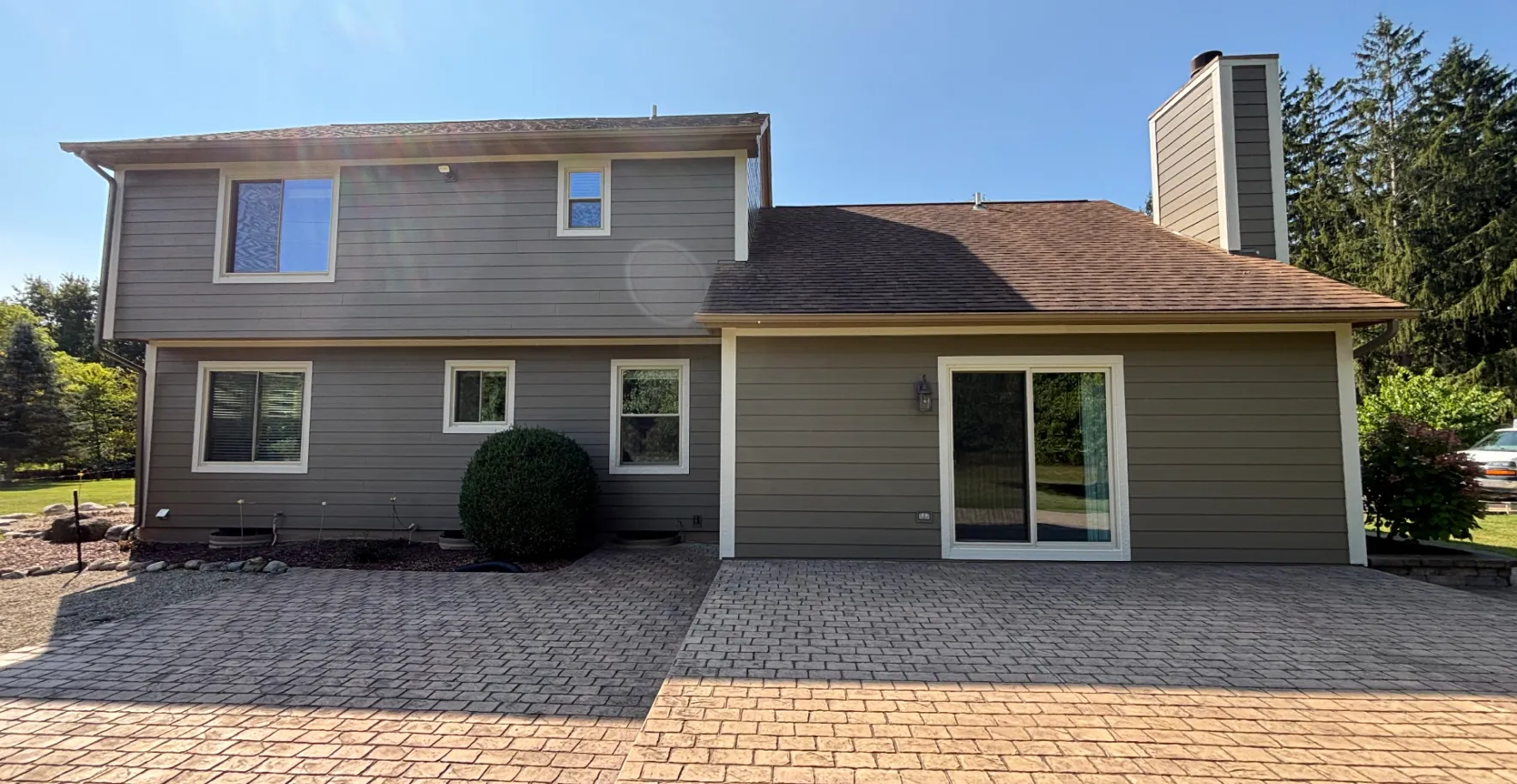
Why a gutter starts pulling away from the house.
On plenty of homes, the gutter up there now went up with the house: light hangers set far apart, fastened into a fascia board nobody expected to carry a Michigan winter. That holds for a while. Then a heavy snow sits on the roof, melts into the trough on a sunny afternoon and freezes solid overnight, and the weight of that ice hangs off every fastener along the eave. One lets go. The run drops an inch at that spot, and from then on water collects there every time it rains.
A sag feeds itself. Standing water is heavy, it turns into a block of ice that is heavier still, and each cycle pries the next hanger a little looser. By the time you can see the dip from the driveway, that section has usually been holding water for a season or two, and the board behind it has been getting wet the whole time.
The repair is usually straightforward. We pull the loose hangers, find sound wood to fasten into, and screw in new hidden hangers on closer spacing so the load is shared along the whole run. Then we reset the pitch so the trough falls toward its outlet again, and we run a hose down it before calling the job done.
Leaking corners, end caps, and the elbow that clogs first.
A drip at the corner is almost always a joint. Miters and end caps get sealed when a gutter is hung, and after years of summer sun on one side and ice on the other, that sealant hardens and cracks. Water finds the gap and runs down the outside face of the trough, which is why you get one stained stripe on the siding under a corner and a dry wall everywhere else.
Fixing it properly means scraping the old sealant out, cleaning the metal down to bare aluminum, and resealing the joint with a gutter sealant made to stay flexible in the cold. Smearing fresh caulk over the old bead is the quick version, and it tends to last about one winter.
Downspouts have their own weak point. The elbow at the top, where the outlet turns back toward the wall, is the first place leaves and shingle grit pack in. Once it plugs, the whole run backs up behind it and pours over the front lip in a hard rain. We clear the elbow and the leader, flush them through, and make sure the water leaves the bottom well clear of your foundation.
How we decide between fixing a run and replacing it.
Repair is the right answer far more often than a sales pitch would suggest. This is how we make the call on a Holt house.
The metal is still sound
If the trough is straight, free of corrosion, and only loose at the hangers or leaking at a joint, it can be re-hung and resealed and give you years more service. A good share of the runs we look at land right here.
The pitch can be recovered
Water standing in the middle of a run is a pitch problem. If the fascia behind it is straight enough to hold a line, we reset the hangers to a fall the water will follow. If the board itself has bowed, the board gets fixed first.
The run has split or rusted out
Old steel that has rusted through, or aluminum torn open at the seams from years of ice, is past patching. That is when we recommend new gutter, and our gutter replacement page explains how that job goes.
The board behind the trough tells us more than the gutter does.
Every hanger is only as good as the fascia it is screwed into. When a gutter has been leaking behind itself for a few winters, water runs down the back of the trough and soaks the board, and soft wood will not hold a screw for long. Re-hanging a gutter on a wet, spongy fascia is the most common way a repair fails inside a single season.
So before anything goes back up, we press along the board at each hanger location and probe the spots that look dark or stained. If a short section is soft, we cut it out and replace it, and you see photos of what we found that same day, with the wood priced as its own line. If the rot runs farther than that, we stop and talk it through with you before going any further.
We also look at the drip edge where the shingles meet the eave. When it is missing or too short, water coming off the roof can curl back under the shingle edge and run down behind the gutter, and no amount of resealing will stop it. Adding or extending that flashing is a small job that keeps the board dry from then on.
Ice at the eave is a roof question as much as a gutter one.
Every Michigan winter puts some ice in a gutter, and a little of it does no harm. The trouble starts when the roof keeps feeding the eave meltwater all winter, because heat escaping the attic is melting the snow from below. That water runs down to the cold overhang, freezes in the trough, and builds into a dam that can push water back up under the shingles.
No gutter repair fixes that, and we will not pretend one does. If we see heavy icicles, stained soffits, or a run that keeps tearing loose every February, we ask to look in the attic as well. Often the real answer is insulation and proper roof ventilation, which we handle too.
Storms bring a different kind of gutter call. After a hailstorm, a dented gutter tends to show up on a salesman’s list as the reason you need a whole new system. A dent in the face of a K-style trough is cosmetic unless it has kinked the back or thrown off the pitch. We look at it honestly, photograph it for your adjuster when a claim makes sense, and tell you plainly when it does not.
If you would like the wider view first, our gutter repair page covers how we approach this work in every town we serve, and our Holt page lists the rest of what we do here. When you want someone up the ladder, book a free roof look.
Down to Holt from St. Johns, the same crew every time.
Holt sits just south of Lansing, well inside the 60-mile radius we cover from our base in St. Johns, and it is one of eleven Ingham County communities we work in. Four other jobs come up often enough here to have their own Holt pages: siding repair, siding replacement, shingle roof installation, and roof ventilation. The photos below are real Anchor jobs from around mid-Michigan.
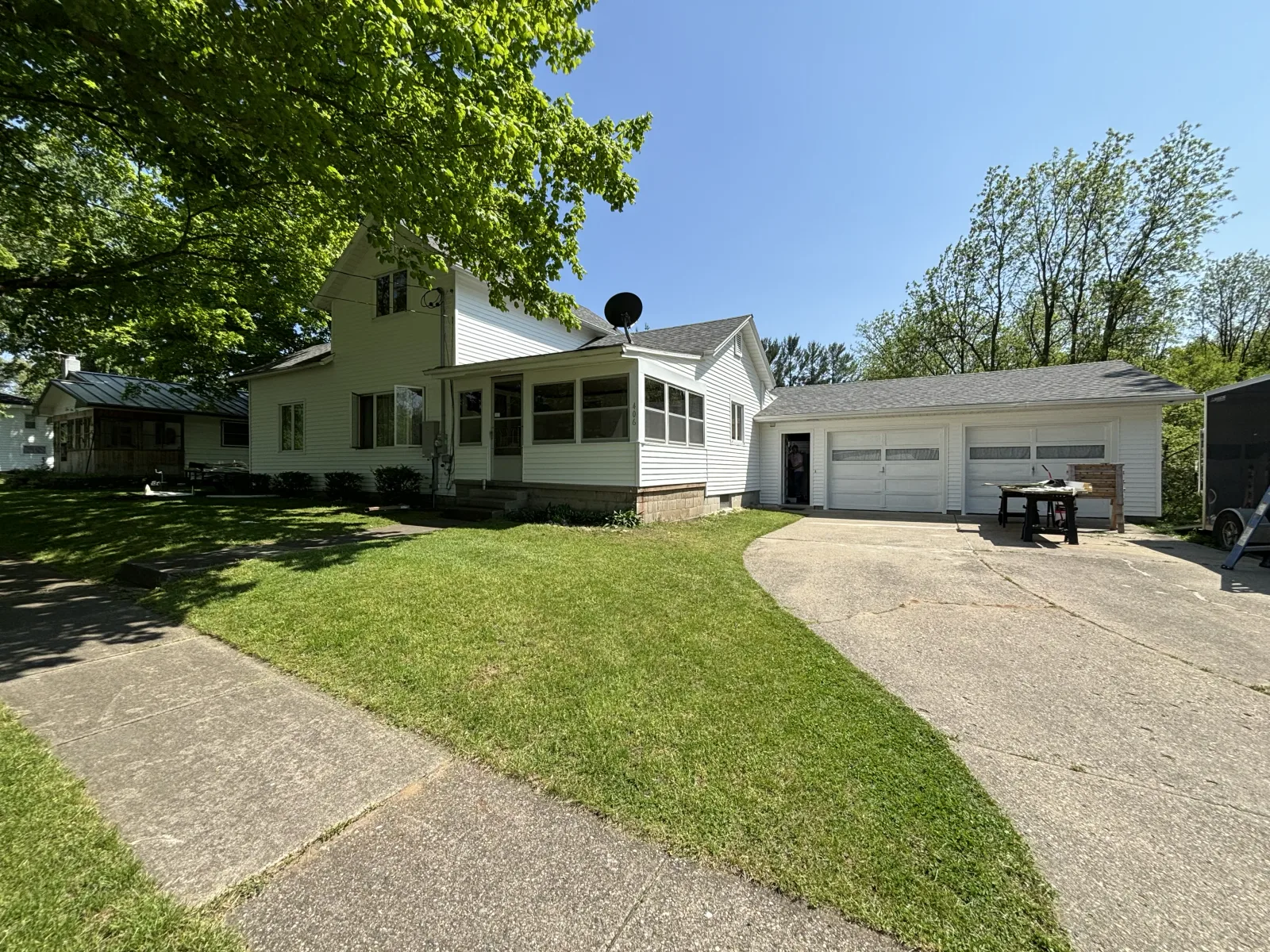

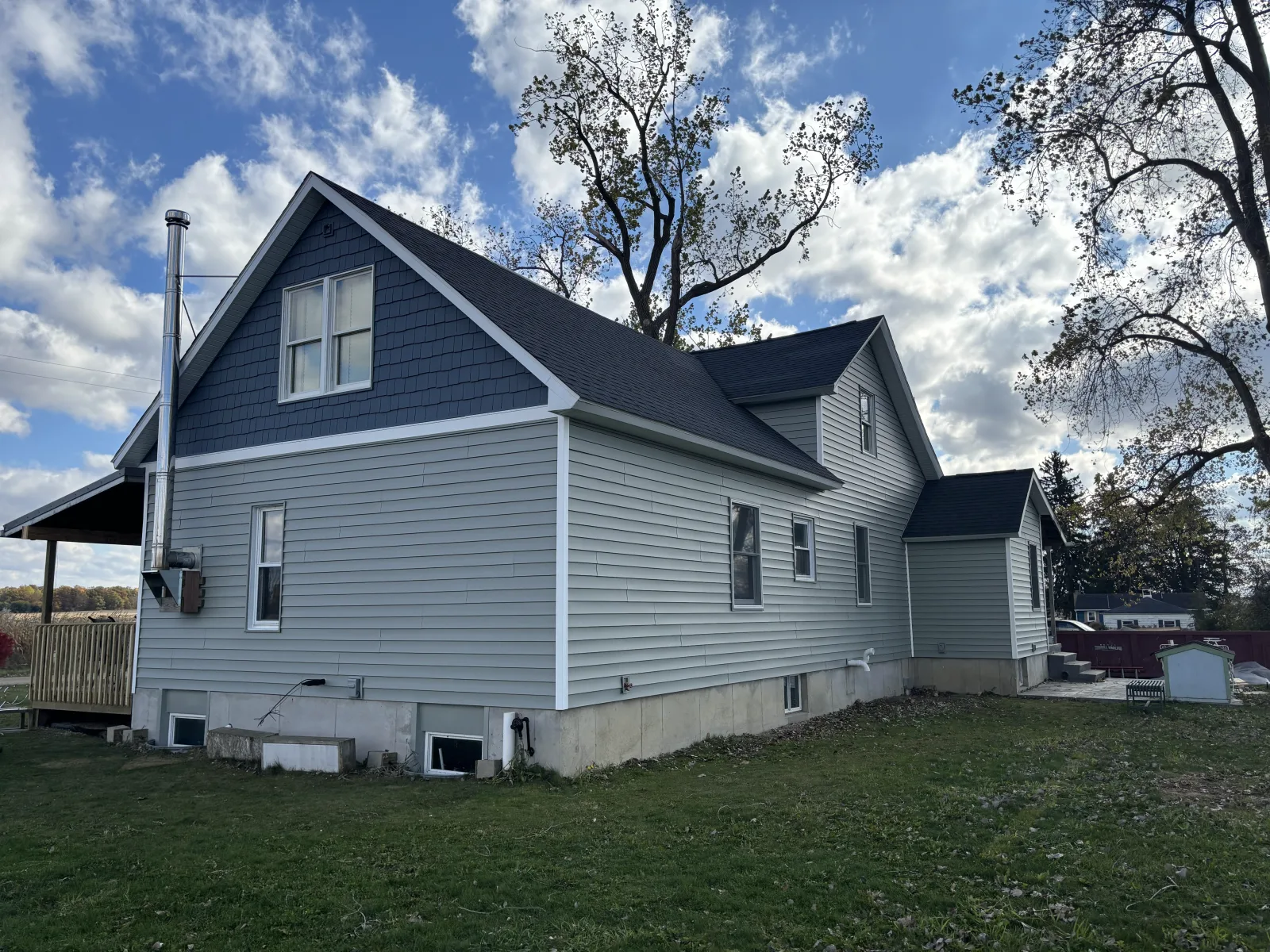
Read more on gutter repair · see all of our work in Holt · or call (989) 900-0018.
Gutter questions we hear from Holt homeowners.
Short answers, nothing to sign. You can see finished work in our gallery, or send the crew a note through our contact page.
Is it worth repairing my gutter, or should I replace it?
Repair it when the metal is sound and the trouble is at the hangers or a joint. Replace it when the trough has split or rusted through along much of the run. At the free roof look we show you which of those your house is, with photos, and why we think so.
Why does my gutter overflow even when it looks clean?
Usually the downspout elbow is packed, so the water has nowhere to go and spills over the front lip. Sometimes the pitch has reversed and water pools at the far end from the outlet. Either one is a quick repair, and we run water down the trough to find out which.
Can you fix a leaking corner without replacing the run?
Yes, in most cases. We cut out the hardened sealant, clean the miter or end cap down to bare metal, and reseal it with a sealant rated for cold weather. If the corner piece itself has cracked, we replace that one piece and leave the rest of the run alone.
What if the fascia behind the gutter is rotten?
Then the board gets fixed before the gutter goes back up, because a hanger in soft wood will only pull out again. You see photos of the bad section the same day, and the wood is priced as its own line, so you know exactly what it adds to the job.
Will repairing my gutters stop ice dams?
No, and be wary of anyone who says it will. Ice dams start with attic heat melting the snow on your roof. A repair keeps the trough attached and draining, while insulation and ventilation are what stop the melting. If your eaves show the signs, we check both.
How long does a gutter repair take?
Most gutter repairs take a day or less from setup to cleanup. If we find fascia that has to be replaced, the job can run longer. You get the plan and the timeline at the free roof look, before anything is scheduled, and we would rather give you a date we can hit than a fast one.
Let us look at your Holt gutters before snow sits in them.
We check every run and the board it hangs on, then give you a fair price in writing for what actually needs doing. If all it needs is a cleanout, we will tell you that too.
(989) 900-0018