
Board and Batten Siding done clean.
The vertical look that defines modern farmhouse, installed with the layout discipline vertical siding demands.
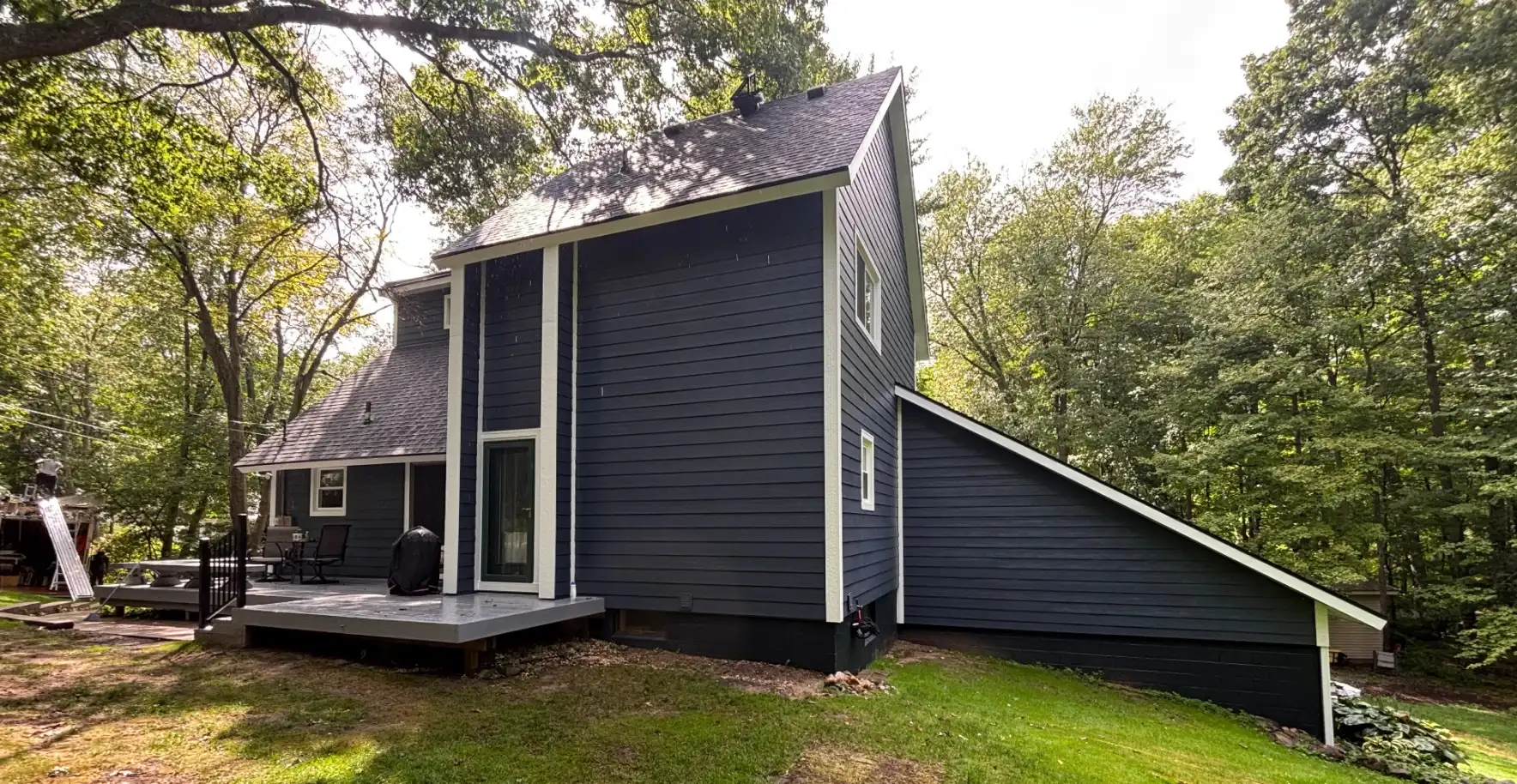
Board and batten is the strongest look in siding right now, and unlike most trends, it’s one with a century of Michigan barns and farmhouses behind it. Wide vertical boards, narrow battens covering the seams, strong vertical lines that make a one-story house stand taller and a two-story house read like architecture. Painted deep navy, black, sage, or crisp white, it’s the modern farmhouse signature, and it’s everywhere for a reason.
Vertical siding is its own discipline, though. Batten spacing has to be planned around windows, corners, and gables so the rhythm never hits an opening awkwardly. Horizontal water management flips: furring, flashing, and venting have to be detailed for boards that run up and down. A crew that treats board and batten like sideways lap siding produces walls that look wrong and drain worse.
We install board and batten across Lansing, East Lansing, Okemos, St. Johns, Grand Ledge, Owosso, and the surrounding mid-Michigan counties, in engineered wood (LP SmartSide panels and battens, which we’re certified on), fiber cement, vinyl, and real wood. Licensed, insured, never subcontracted.
What our board and batten work covers.
- Full vertical wallsThe complete modern farmhouse exterior
- Accent walls and gablesVertical texture mixed with lap or shake
- Engineered wood systemsLP SmartSide panel and batten, certified
- Fiber cement and vinyl optionsThe vertical look at every budget tier
- Layout and batten planningSpacing designed around openings and corners
- Flashing for vertical wallsWater management detailed for up-and-down boards
Vertical lines only work when they’re actually straight.
Board and batten forgives nothing. Every batten is a plumb line the eye can check from the street, every window is a place the spacing rhythm can die, and every wave in the wall telegraphs through the boards. This is layout carpentry, and it’s the part of the job we like most.
We start on paper: batten spacing planned for each elevation so the lines land symmetrically at corners and center on or frame the windows, never clipping an edge. Gables get their own plan, because converging rooflines expose lazy spacing instantly.
Every batten is a plumb line the whole street can check. We hang them like we know it.
The wall behind the boards gets built for vertical drainage: barrier, flashing at the top and bottom of runs and at every opening, and venting details so the wall dries. Vertical siding sheds water beautifully when it’s detailed right and traps it when it isn’t.
Then our own crew hangs it, checking plumb as they go, because a batten that drifts a quarter inch over ten feet is invisible on a tape measure and obvious from the sidewalk. Same people who quoted it, same people at the walkthrough.
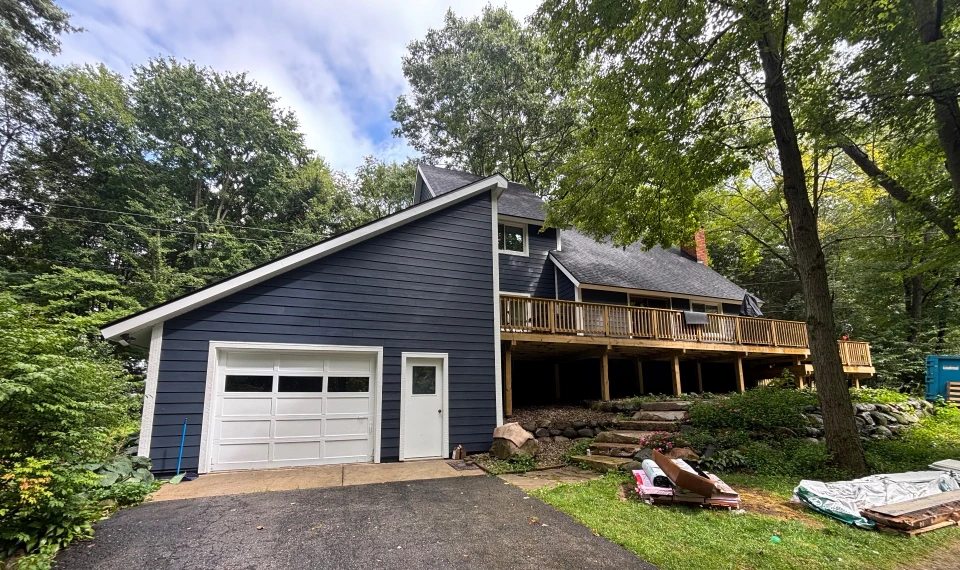
Done the honest way.
Layout on paper first
Batten rhythm planned per elevation, symmetric at corners, clean at every window. The math happens before the nail gun does.
Built to drain vertical
Flashing and venting detailed for boards that run up and down. Vertical walls shed water right only when the details flip with them.
Plumb, checked, rechecked
Vertical lines advertise their own errors. Our own crew hangs and checks every batten, start to finish.
Getting the modern farmhouse look right.
The board and batten houses that look expensive share three decisions. First, material: engineered wood and fiber cement systems give crisp, dead-flat boards with battens proportioned for the look, while bargain vinyl verticals can read hollow up close. LP SmartSide’s panel-and-batten system, which we’re certified to install, is our usual recommendation for the balance of look, warranty, and price.
Second, color strategy. Deep, low-sheen colors, navy, charcoal, black, sage, are what make the vertical shadows read, usually paired with warm wood accents at the porch and gable brackets. Prefinished options like Diamond Kote hold those dark colors against UV far better than field paint, which matters because dark walls fade first.
Third, restraint. Full board and batten suits farmhouse and cottage forms. On other houses, the strongest move is often mixing: vertical in the gables or on the entry mass, lap on the body. It keeps the vertical drama where it works and the budget where it belongs. We’ll tell you honestly which version your house wants.
Bring us a photo you love at the free look, or just point at a house in your neighborhood. We’ll tell you exactly what it’s made of, what it costs to get there, and what we’d change for your elevation.
From recent jobs.
Real Anchor work across mid-Michigan, the standard your board and batten project gets. More in the gallery.
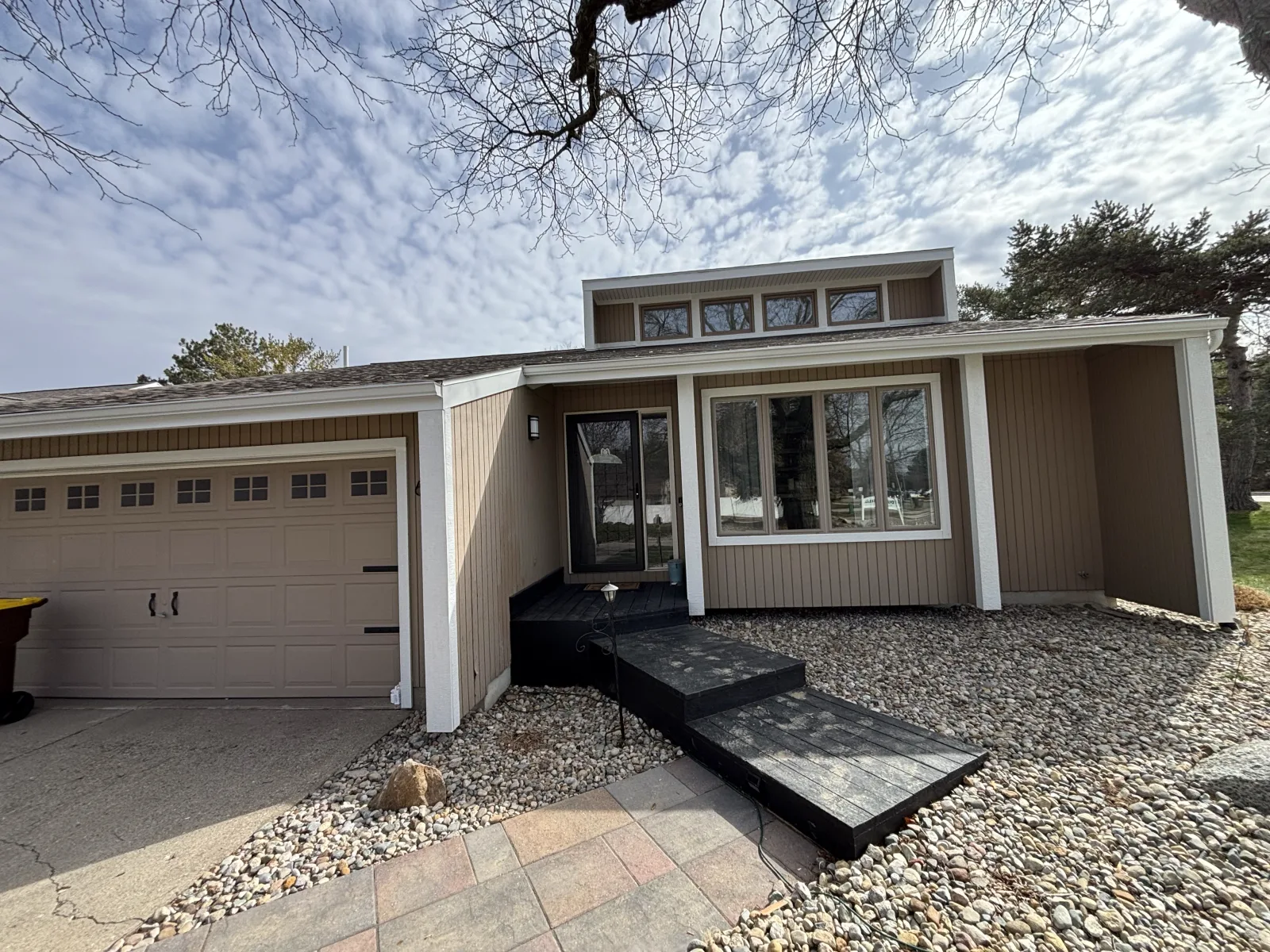
Board and batten across mid-Michigan.
Board and batten belongs here. It’s the cladding of the barns this area was built around, which is part of why it looks so right on the farmhouses outside St. Johns and Ithaca, and on the modern-farmhouse builds going up around DeWitt, Grand Ledge, and Okemos. We install it as full elevations, entry accents, and gable features across the whole nine-county map.
Local weather informs two of our defaults: prefinished boards for the deep navy and charcoal looks, because Michigan sun and freeze chalk dark field paint fast, and vertical-specific flashing details, because our wind-driven rain finds any wall that drains wrong.
The free look works the same anywhere in the area: bring a photo you love or point at a house you’ve driven past, and we’ll come back with a batten layout for your actual elevation and a firm written price.
Straight answers about board and batten.
We’d rather you know what you’re paying for. These are the answers we give every customer, and our gallery shows the results.
What exactly is board and batten siding?
Wide vertical boards with narrow strips, the battens, covering the seams between them. It started as Michigan barn construction and became the defining look of the modern farmhouse. Today it’s built from engineered wood, fiber cement, or vinyl systems as well as real lumber.
Is board and batten more expensive than lap siding?
Somewhat, in the same material. The layout planning and batten work add labor, and trim details at openings take longer. Mixing vertical accents with lap walls is the common way to get the look while keeping the budget sane.
What material is best for board and batten?
For most homes, an engineered wood system: LP SmartSide panels and battens, which we’re certified on, give flat boards, crisp battens, and a 5/50-year warranty. Fiber cement is the max-durability pick, vinyl the budget pick, real wood the purist pick with a coating cycle attached.
Does vertical siding have problems with water?
Only when it’s installed like horizontal siding. Vertical walls need flashing at the top and bottom of board runs and correct detailing at openings so water sheds and the wall vents. Built that way, vertical siding drains beautifully. That detailing is standard practice on our installs.
What colors work best for board and batten?
Deep navys, charcoals, blacks, sages, and clean whites are the looks people ask us for, usually with warm wood porch accents. If you’re going dark, prefinished boards like Diamond Kote hold dark color against sun far better than field paint, and we’ll show you both routes.
Can I mix board and batten with other siding?
Yes, and it’s often the strongest design: vertical in the gables or entry, lap on the body, sometimes shakes as a third texture. We plan the transitions so the profiles meet on clean flashed lines.
Will board and batten look dated in ten years?
Barns have worn it for a century, so the base look isn’t going anywhere. What dates is execution: gimmicky colors and cramped batten spacing. Classic proportions in a strong neutral will read as intentional for the life of the wall.
Does board and batten cost more to maintain than lap siding?
No, maintenance follows the material, not the direction. Engineered wood and fiber cement verticals carry the same long coating cycles and warranties as their lap siblings, and prefinished options need essentially none. The batten lines do make gutter and roofline upkeep slightly easier to see, which owners tend to like.
Other things we do.
Serving Lansing, East Lansing, St. Johns and the surrounding counties. See our service area → · Questions? Contact us or call (989) 900-0018.
Ready for vertical lines done right?
Call the crew for a free, no-obligation look. We’ll plan the batten layout for your actual elevation, not a stock diagram.
(989) 900-0018