
The night it blows through, get the water stopped. The rest we can sort out in daylight.
Tarping, photographs your insurer can work from, and roof, siding and gutters put right by one insured crew that answers its own phone.
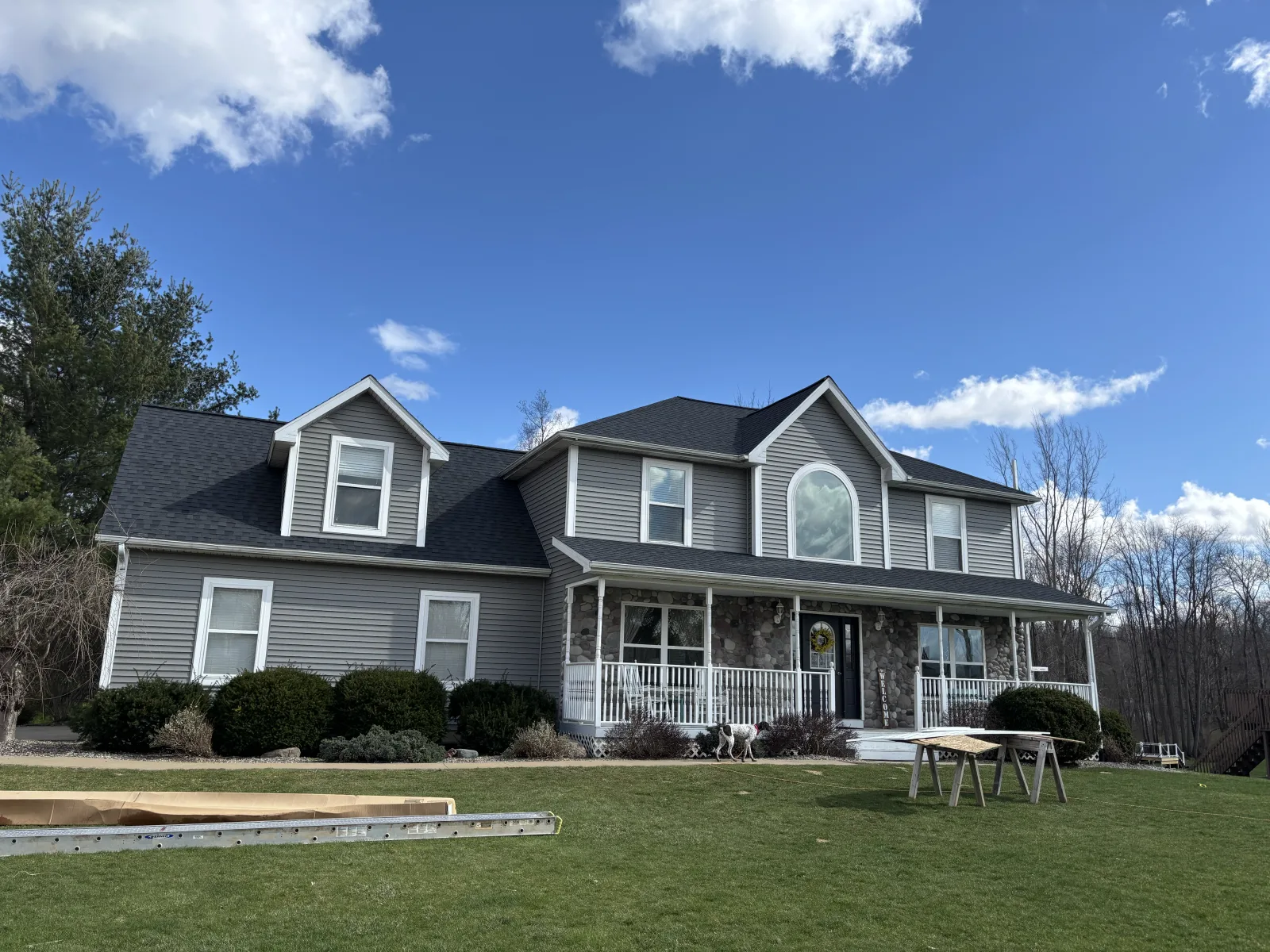
What a bad night does to a lakeside house.
Haslett sits beside the water, and water changes how weather arrives. Wind crossing an open lake keeps its speed instead of breaking up over rooftops, so it reaches the shore streets whole and hits the gable ends and the exposed elevation hardest. Older cottages here took their first shingles when the lots were seasonal, and a century of additions left rooflines with more seams than a builder would draw today. Every one of those seams is a place a gust can start a course lifting. The sixties ranches a few blocks inland present a long, low, unbroken slope, which sheds wind well until hail arrives and works the whole plane at once.
Hail is the quiet one. A stone big enough to bruise the mat under a shingle rarely leaves anything you can see from the driveway, and the shingle keeps shedding water for a year or two before the bruise opens. Metal tells the story sooner: dented gutter aprons, dimpled downspouts, pocked furnace and dryer vents. When we walk a Haslett roof after a hailstorm, those soft metals are the first things we check, because they hold the record of stone size and direction better than the shingles do.
Falling timber accounts for the rest. Mature trees line the older streets near the lake and lean over garages and back porches, and a saturated root plate in July gives up in wind that would have held it in March. A limb strike is rarely a single puncture. The impact travels, cracking decking two or three rafter bays away and shearing fasteners, and that wider damage stays hidden until somebody gets up there with a flashlight and looks at the underside from the attic.
Then there is the slower kind. Ice builds at the eaves through a Haslett winter, backs meltwater up under the courses, and pushes it into the sheathing where nobody sees it. By April the ceiling shows a stain and everyone blames the last thunderstorm. We would rather tell you which one it actually was, because filing on the wrong event helps nobody.
Storm restoration is one of the services we bring to Haslett and the rest of Ingham County. Read more about our approach to storm restoration, see everything we handle in Haslett, or book a free roof look.
Tarping first, paperwork second.
If your roof opened up overnight, the only thing that matters before sunrise is keeping the next rain outside. Call us and we will get a cover over the breach, run it up over the ridge where the slope allows, and fasten it so a second front does not peel it off. A tarp done properly buys a week or two without soaking insulation, staining drywall or swelling the decking, and every one of those is a bigger repair than the hole that caused it. Do not climb up yourself in the dark on a wet slope to try it. While we are up there we photograph the opening before we cover it, because once a tarp is down the evidence underneath is out of sight, and an adjuster who arrives four days later will want to see what was there on the night. Keep whatever you spent on emergency protection, since most policies treat sensible temporary measures as part of the loss. Then we come back in daylight, pull the cover, and inspect the whole house properly: every slope, both exposed elevations, the gutter runs, the vents, and the attic underside where a limb strike hides its real reach.
Writing down what the storm actually did.
A claim is settled on evidence, so we gather it the way somebody reading it later will need it, and we hold to three rules while we do.
Photographed close
Every slope gets shot wide for orientation and then close on each hit, with something in frame for scale. Bruised shingles, dented metal, cracked siding on the windward wall, and the attic underside all go in the same file, dated, so nothing rests on anybody’s memory of the night.
Scoped line by line
You get the repair written out in plain language: what we found, what it takes to put right, and why each item is on the list. Your adjuster can check it against the photographs without a phone call, and you can read it yourself and see nothing hidden in it.
Nothing added
We do not stretch a claim to reach a bigger number, and we do not touch your deductible. If a slope came through the storm intact, it stays off the scope. That restraint is what keeps our documentation worth reading when an adjuster’s scope comes back for comparison.
One crew, one scope, one visit at a time.
Storms rarely damage a roof and leave the walls alone. Wind that lifts shingles on the lake-facing slope usually cracks a run of siding on the same elevation and folds a gutter on the way past, and hail that bruises the roof dimples the downspouts underneath it. Handled as three separate jobs by three separate outfits, that becomes three schedules and an argument about who caused the scratch. We hold roofing, siding and gutters in one scope with our own crew, so the whole exterior gets put back in the correct order and one company answers for the result.
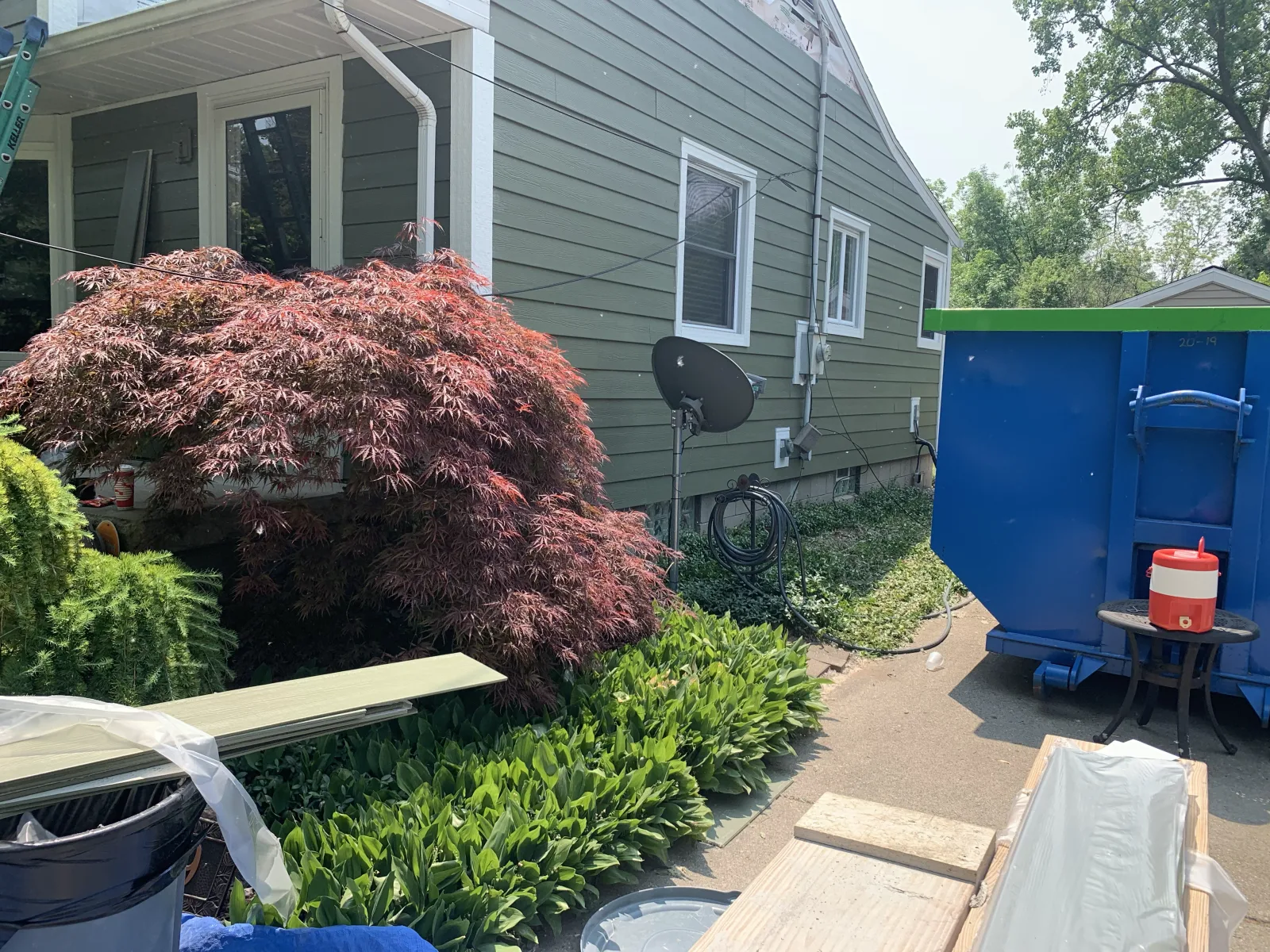
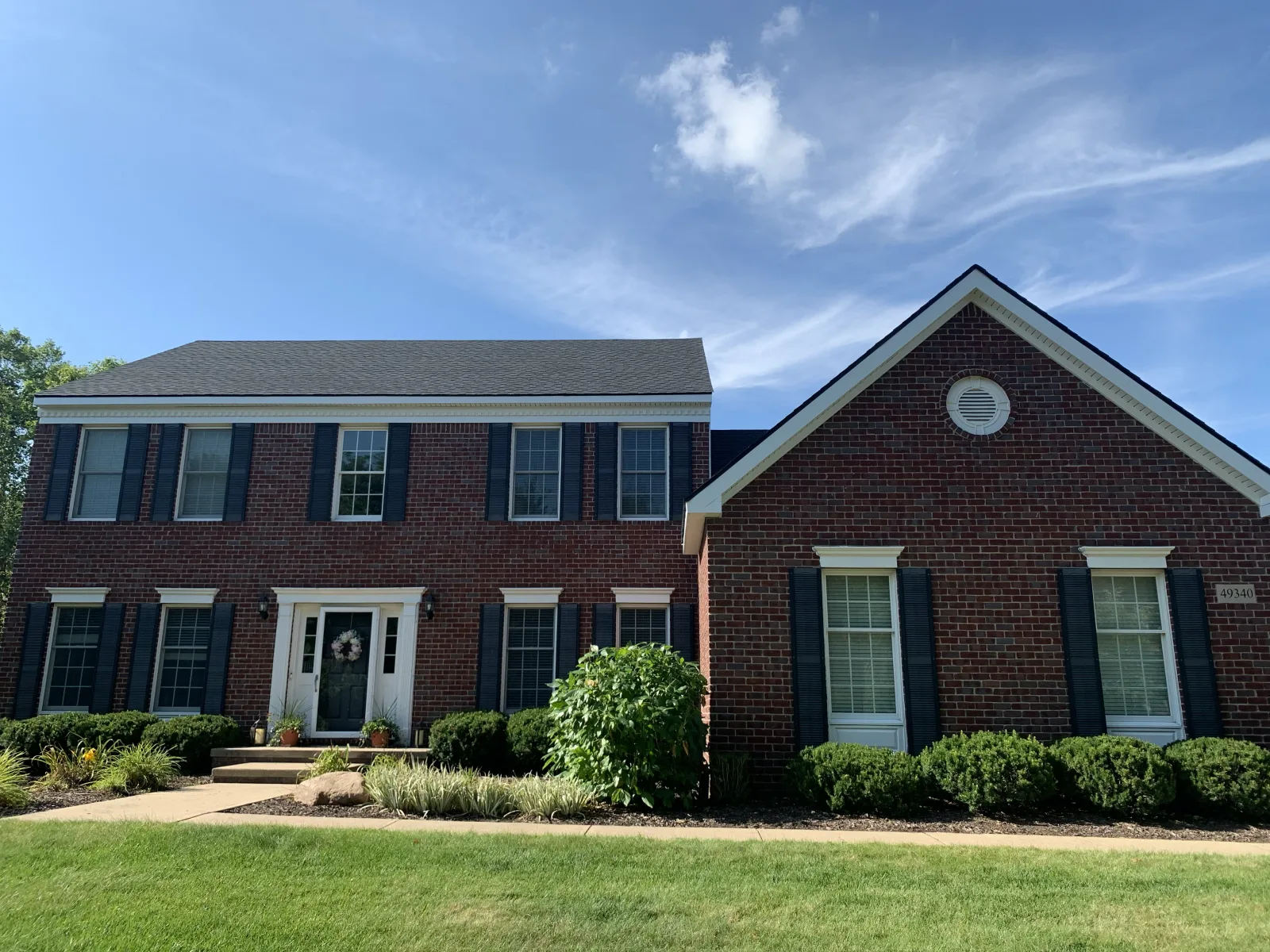
We work out of St. Johns and cover all of Ingham County, so nobody has to wait for an out-of-town truck to come back through. Materials go on to CertainTeed, LP SmartSide, James Hardie and Lomanco specification, which is what keeps the warranty alive and, more to the point, keeps the repair sitting through the next Haslett winter. The homes below are real Anchor jobs from around mid-Michigan.

More about storm restoration · all our Haslett services · call (989) 900-0018.
First call to final walk.
Call the number and you reach the crew. If water is coming in, covering it is the same day, weather allowing. Otherwise we set a time for the free roof look and give you a window you can plan around.
On the visit we get up on the roof, walk the elevations, check the gutters and vents, and go into the attic if the ceiling has stained. You see the photographs on the spot, and you hear a straight read: this is storm, this is age, this is worth a claim, this is not. If your insurer has already assigned somebody, we will meet them at the house so everyone is looking at the same roof on the same day instead of trading paperwork for two weeks.
Once the scope is agreed we schedule the work, order material, and give you a realistic start date. The crew arrives, protects the landscaping and the drive, and works one trade after another in the order the house needs. Nothing is handed to a subcontractor, so the person who inspected your roof after the storm is the one fastening the new one down.
At the end we walk the property with you, run a magnet over the lawn and the drive, and go through what was replaced and what was left alone and why. You get the paperwork, the warranty details, and a number that still answers next spring.
After the storm, what people ask us.
Plain answers for homeowners near the lake, and finished work you can look at in our gallery.
Water is coming in right now. How fast can you cover it?
Call the number and tell us where it is getting in. We carry tarping material and we treat an open roof as the same day’s work, weather allowing. Stopping water is always ahead of paperwork, and we photograph the opening before the cover goes on so the evidence is not lost.
Can you tell whether hail actually hurt my roof?
Not from the ground, and neither can anyone else. We get on the slope and read the soft metals first, the gutter apron, downspouts and vents, since they record stone size and direction, then check the shingle mat for bruising. You see every photograph before anything is decided.
Do you deal with the insurance company for me?
We do the part a contractor should. We document the damage, write a scope your adjuster can follow line by line, and meet them at the house if you would like us there. The insurer decides the claim, not us, but good evidence gives you a fair hearing.
A tree limb came down on the garage. What first?
Keep everyone out from under that roof and photograph the limb where it fell before anybody drags it off. Then call. Impact damage spreads further than the hole suggests, so we check the decking and rafters either side and the attic underside before scoping the repair.
Will you take on the siding and gutters too?
Yes, and usually they need it. Wind strong enough to lift shingles tends to crack siding and fold gutter on the same elevation. We put the whole exterior back in one scope with one crew, so you are not chasing three companies through one repair.
What if the storm did not really damage my roof?
Then we say so at the house, before you call your insurer. Curled tabs, granule loss and worn pipe boots are age, and an adjuster reads them that way too. If it is simply worn out, you get the honest read and a fair price in writing for the repair.
Storm came through Haslett? Let us get up there and look.
Call the crew for a free, no-obligation look at your Haslett home. We’ll tell you straight up what it needs.
(989) 900-0018