
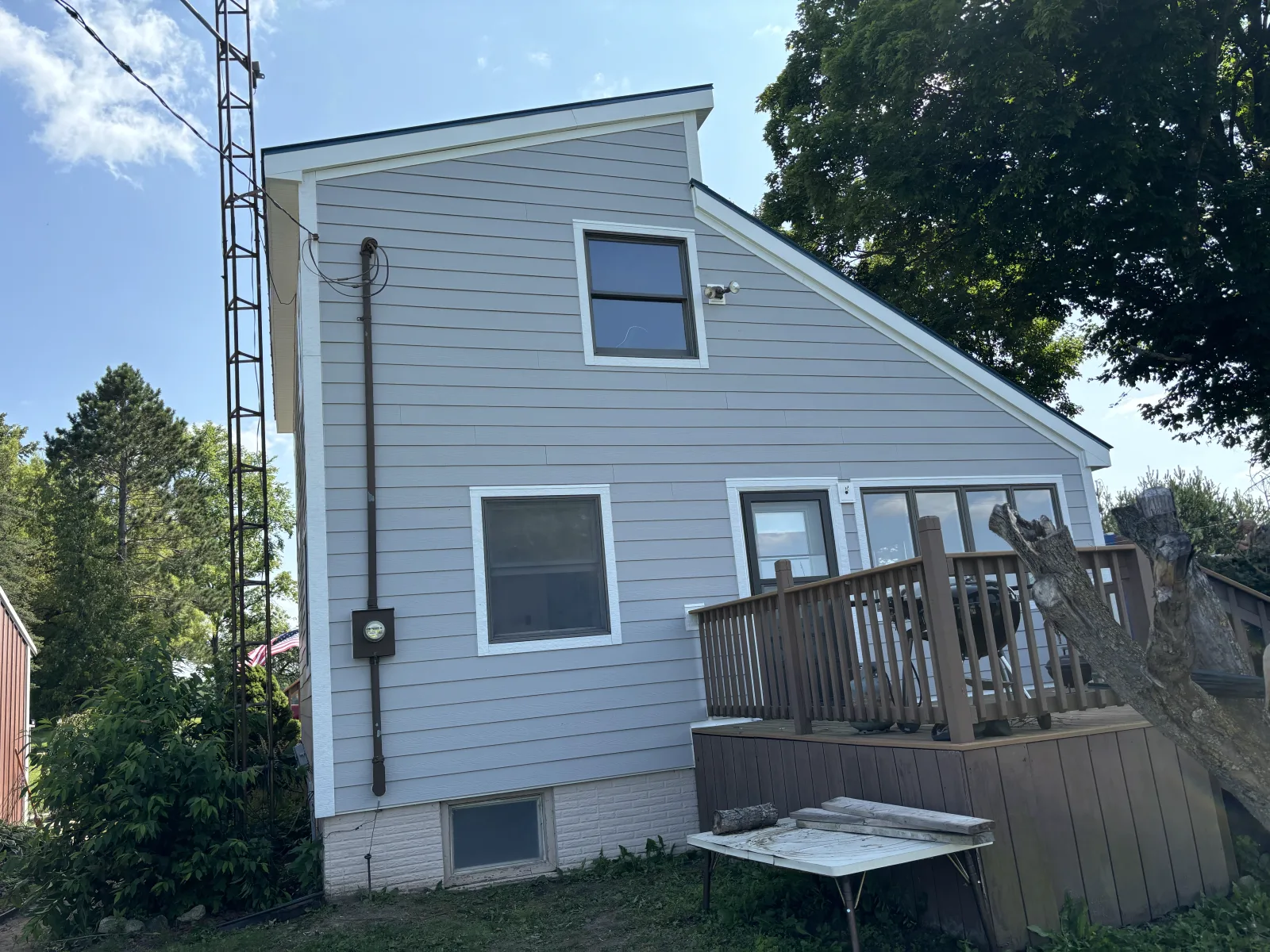
A siding patch that holds, and the kind that hides a bigger problem
Most siding damage on a Holt house is small: a cracked panel, a course the wind pulled loose, a soft board by the back steps. Small damage usually deserves a small fix, and we say so. The catch is that a patch can look perfect from the driveway while the wall behind it keeps getting wet. Before we put a number on any repair, we want to know whether we can match what is on the house, whether the sheathing is still sound, and why that spot failed in the first place. Those answers decide whether a repair is honest work or a cover story.
Matching the profile is harder than matching the color
Lap siding comes in more shapes than most people realize. Exposure width, the shape of the bottom edge, smooth face or wood grain, a single course or a double that reads as two. Miss any one of those and the repair announces itself from across the street, even when the color is close.
Color is the second hurdle. Vinyl and painted fiber cement fade on the sunny elevations, so a new panel straight out of the box can sit a shade darker than the wall around it for years. When the original product is discontinued, or the faded wall will never agree with a fresh panel, an old trick works well. We borrow siding from a wall nobody looks at, behind a deck or facing the neighbor’s garage, and put the new panels back there instead. The weathered pieces go where people see them.
If neither route gets a match we can live with, you hear that before any work starts. Some homeowners accept a visible patch on a back wall. Few want one beside the front door.
Rot starts low, near the ground and behind the downspout
The bottom two or three courses take the worst of a Michigan year. Snow piles against them and melts slowly. Splashback from the driveway hits them every rain. A downspout that dumps right at the foundation soaks the same few boards over and over, and mulch beds built up season after season can bury the starter course entirely.
On hardboard or engineered wood, that shows up as swelling. The bottom edge thickens, the paint lets go, and a screwdriver sinks in where it should bounce off. On vinyl, the panel itself shrugs it off while the sheathing behind it quietly turns soft.
Replacing those low courses is a fair repair when the cause gets fixed in the same visit. That might mean extending a downspout, pulling the mulch back so there is clearance above grade, or adding a kickout flashing where a roof edge sheds water onto the wall. Swap the boards without touching the cause and you will be calling about the same corner in a few winters.
Window edges are where most leaks actually get in
When a homeowner shows us a stained interior wall under a window, the siding usually takes the blame. More often the water came in around the window itself: a trim joint that opened up, caulk that dried and pulled away, a head flashing that was never installed or was tucked behind the wrap when it belonged over it.
A siding repair that ignores the window will look tidy and leak the same way next spring. So on any repair near an opening, we take the panels off far enough to see how the window was flashed. Sometimes the fix is a new piece of head flashing and properly lapped tape. Sometimes it is a trim board that has been wicking water for years and needs to come out.
None of that is visible once the siding goes back on, which is exactly why we photograph it while the wall is open. You should see what you are paying to have corrected.
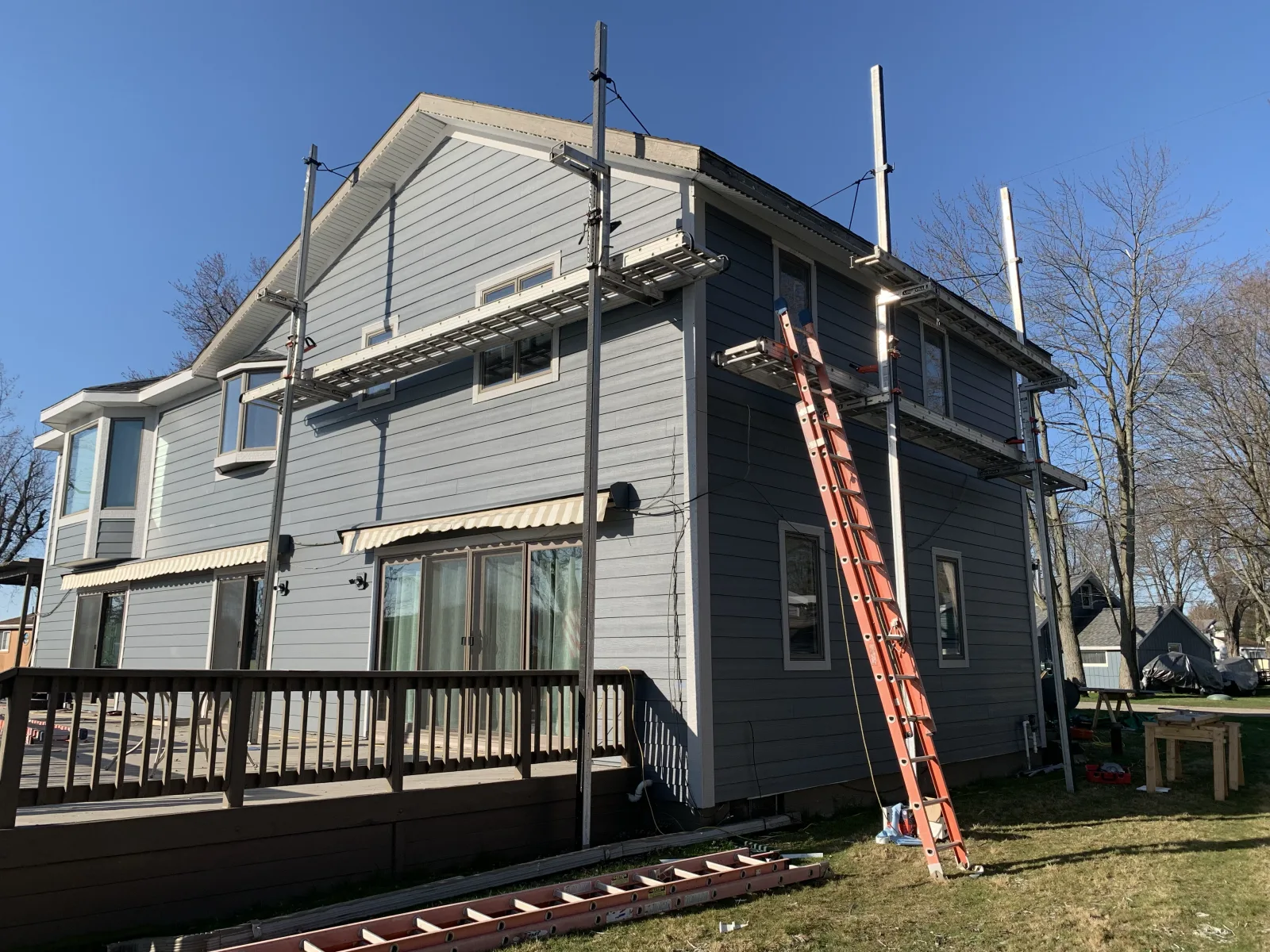
What we check once a panel comes off
Pulling a few panels is the cheapest look at a wall’s health there is. Behind the siding we want to see a continuous weather barrier, lapped the right direction so water running down the wrap stays on the outside of it. Torn wrap, wrap cut around a vent and never taped, or no wrap at all on an older house each change the conversation.
Then the sheathing. We press on it. Firm and dry means the problem stayed on the surface, and a repair is the right call. Spongy, dark, or crumbling at the edges means water has been reaching the structure for a while, and the question becomes how far it has traveled.
We follow the soft area until we hit solid wood. If that happens within a foot or two, we cut out the bad section, patch the sheathing, rewrap and put the siding back. If it keeps going along the wall, the repair you asked for is no longer the job your house needs, and you deserve to hear that from us before anything gets closed back up.
A patch that looks perfect from the driveway can still be holding water against the wall behind it.
Storm-loosened vinyl and the honest call on a bigger job
After a hard wind, the usual Holt call is a few vinyl panels unlocked and flapping, or a piece lying in the yard. When the nailing was done right and the panel simply unzipped at the lock, that is a quick, clean fix. When panels were nailed tight against the wall, they cannot move with the temperature, and that wall will keep shedding pieces every big blow.
That is the point where we will tell you a repair is the wrong spend. If a whole elevation is nailed wrong, if the sheathing is soft in several places, or if the product is failing on walls the storm never touched, patching only delays the bill. A full re-side of that wall, or the house, is the honest answer, and our siding replacement work in Holt explains how that job runs.
Most of the time, though, the damage is contained, and the right job is the smallest one. That is how we write it up. The whole approach to small fixes is laid out on our siding repair page for Holt.
Questions we hear about siding repair
Can you match siding that has been on the house for decades?
Often, yes. We look at the profile, exposure and texture first, then color. If the exact product is gone or the old panels have faded too far, we can move weathered siding from a hidden wall to the spot people see and put new material where it will not show. If neither works, we tell you before starting.
Will my insurance cover a few panels that blew off?
Sometimes. Wind damage is a covered loss on many policies, but a few panels can easily land under your deductible, which makes filing pointless. We look first, photograph what the storm did, and tell you plainly whether a claim makes sense. A tiny or denied claim can follow you, so we will not push one.
How do I know if my siding repair is really a replacement?
Watch for soft sheathing that keeps going once the panels come off, the same failure showing up on several walls, or nailing mistakes across a whole elevation. Any one of those means a patch will not last. We check all of it during a free inspection and give you a fair price in writing for the job the wall actually needs.
Not sure whether that cracked panel is a quick fix or a warning? Call (989) 900-0018 and we will come walk the wall with you, or send us a note about the damage to get on the schedule. We don’t quote siding off a photo, so the note only starts the conversation.
Fix what failed, and only that
Our own crew, the same people who inspected the wall, and a fair price in writing before a single panel comes off.
(989) 900-0018 Or send us a note about your siding →