
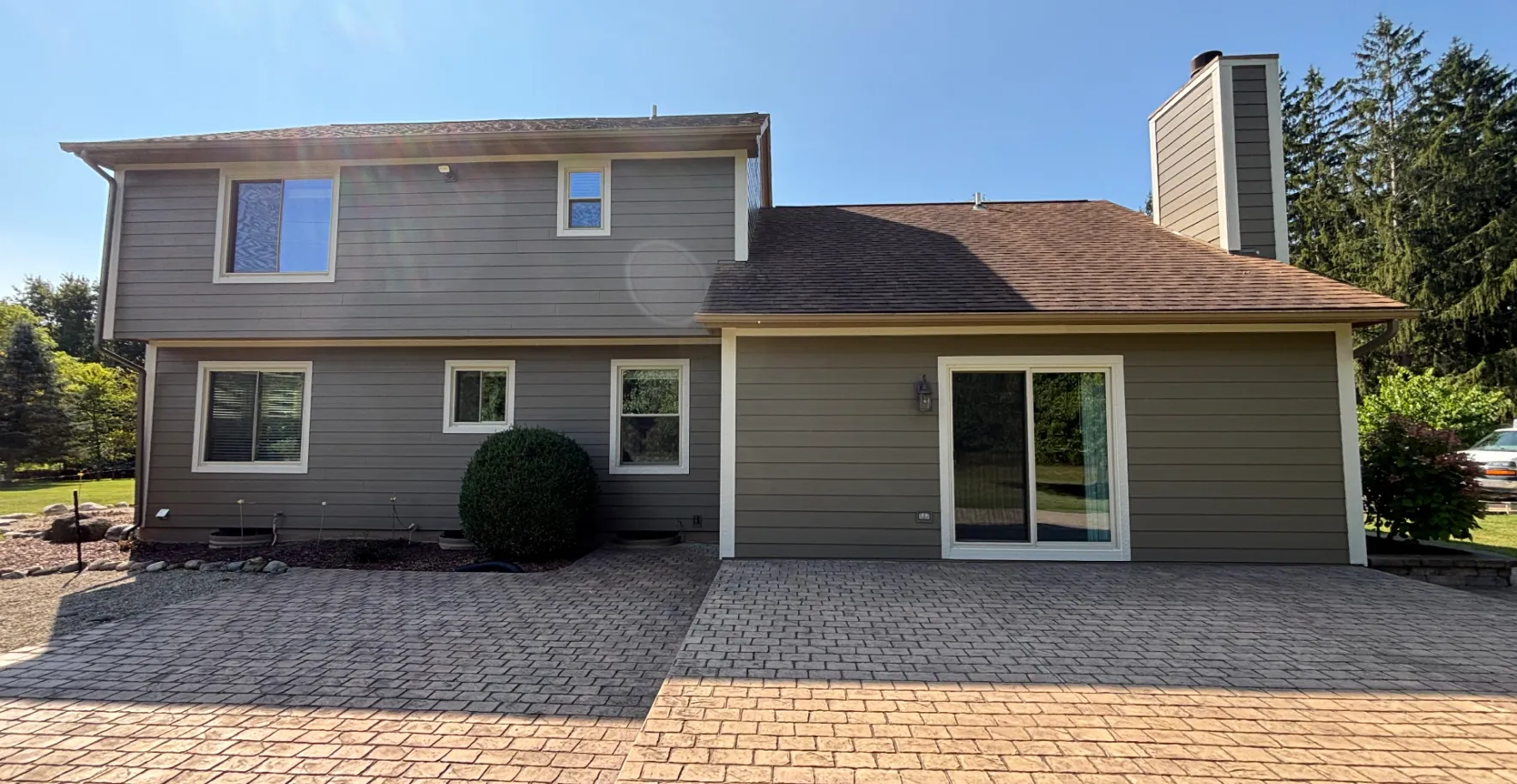
Sagging gutters, leaking seams and the downspout elbow nobody checks
Most gutter trouble on a Holt house comes down to a short list: a run pulling away from the fascia, a corner or end cap dripping every rain, a downspout elbow packed solid, or a trough that holds water because the pitch drifted. Each of those is usually repairable in a single visit. The exceptions are runs bent past straightening and fascia rotted behind the gutter, and that is where an honest contractor tells you to replace instead of patch. Below is how we tell the difference on your eaves.
Why a gutter run starts to sag
A gutter hangs on its fasteners, and fasteners loosen. Older installations used long spikes driven through the trough into the fascia, and every freeze and thaw backs those spikes out a little further. Hidden hangers screwed into the fascia hold far better, but even those let go when the wood behind them goes soft.
Weight speeds it along. A gutter full of wet leaves and standing water is heavy, and in a Michigan winter that same trough can fill with ice that sits there for weeks. Ice building at the eave loads the front lip and pries the whole run outward from the house.
The repair on healthy fascia is straightforward: pull the loose spikes, add hidden hangers at proper spacing, and reset the run. When the screws spin in the wood instead of biting, though, the hangers were never the real problem. That job is a fascia repair first and a gutter repair second, and we will show you the soft spot before we quote either one.
Leaking seams and end caps
Even a continuous run of gutter has joints. Every inside and outside corner is a miter, every run ends in an end cap, and every downspout drops through an outlet cut into the bottom of the trough. Each of those depends on sealant, and sealant dries, cracks and lets go after enough seasons of sun and ice.
A dripping corner tells on itself. You see a stain on the siding below it, a line of moss or a worn spot in the mulch, or water running behind the trough onto the fascia. Left alone, that drip keeps the fascia wet and starts the rot that eventually takes the hangers with it.
The fix is to clean the joint down to bare metal, remove every trace of the old sealant, and reseal with a gutter-rated product. Smearing fresh caulk over old caulk is what most of the failed repairs we see have in common. Sectional gutters, with a joint every few feet, simply give water more places to escape, and that becomes part of the repair or replace conversation.
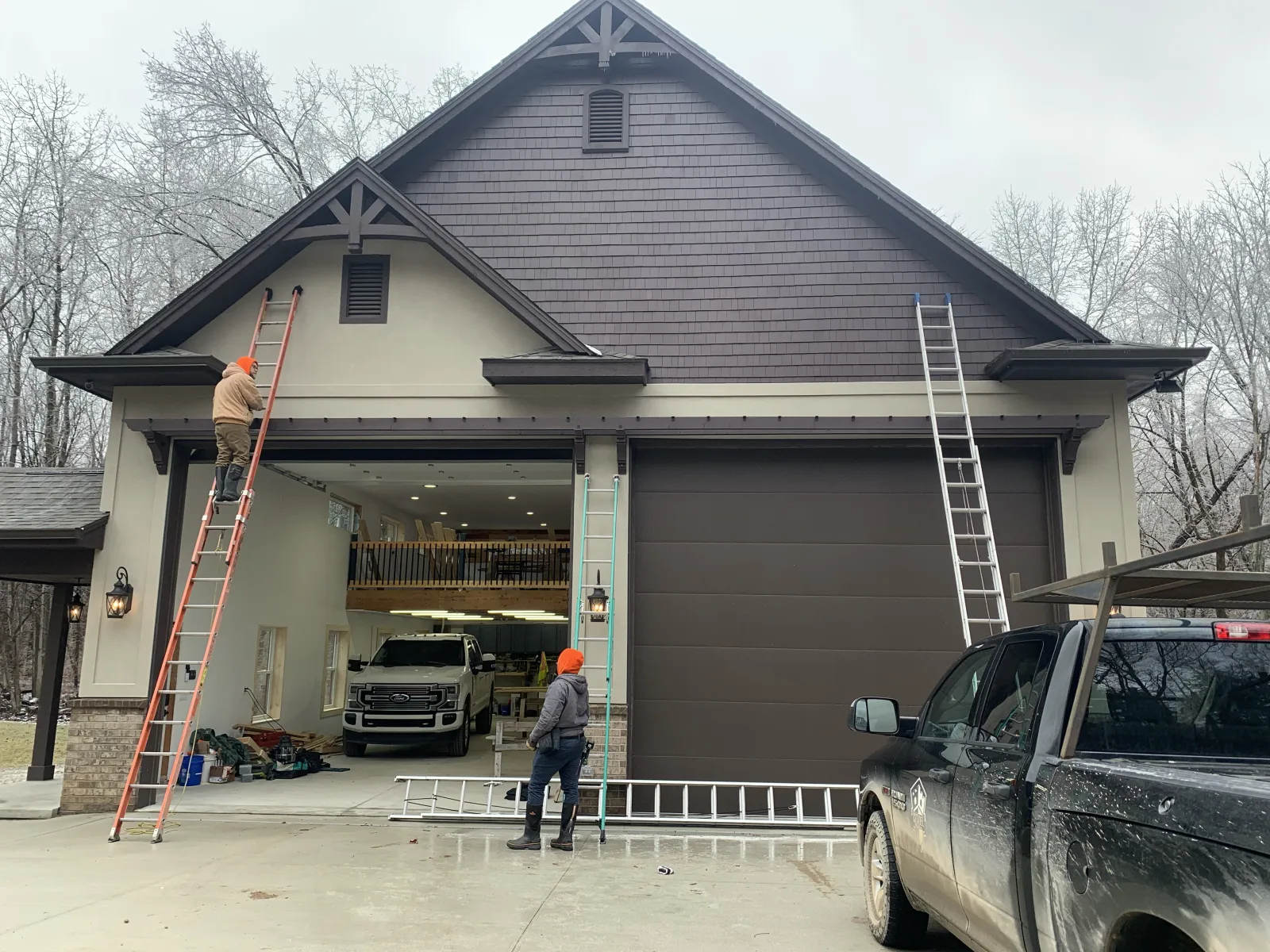
The clogged downspout elbow
When a gutter overflows in a heavy rain even though it looks clear from the ground, the clog is usually at the bottom. A downspout has two or three elbows, and the top one, right under the outlet, catches maple seeds, shingle granules and the occasional tennis ball. Once that plugs, the whole run backs up and spills over the front edge.
Overflow does more damage than it looks like it should. Water dumped along the foundation finds its way toward the basement, splashes the bottom courses of siding, and in winter freezes into a sheet across the walk. A gutter that spills over the same corner every storm is often a quick fix for a problem that has been soaking one spot for years.
We clear the elbow, flush the downspout from the top, and check where it lets out. If it empties right at the foundation, an extension carries the water away from the house. Where one downspout is draining too much roof, adding a second outlet takes load off it. Our gutter repair page for Holt lists the rest of what we fix.
A gutter that spills over one corner every storm is usually soaking the same patch of foundation, siding and walkway.
Pitch that holds water
A gutter needs a slight, steady slope toward its outlet. Too little and water pools in the trough, leaves settle and rot in place, and mosquitoes move in. Too much on a long run and the high end hangs so far below the shingles that water shoots right past it in a downpour.
Pitch goes wrong over time as hangers loosen unevenly. Sometimes it was wrong from the day it went up. You can often spot it after a rain: water standing in one section long after the rest has drained, or a dark line of debris collecting at a low point partway along the run.
Resetting pitch means loosening the run, snapping a chalk line, and rehanging it on new hangers to the right slope. On a long run with the outlet at one end, splitting it so water drains toward both ends sometimes works better than chasing a steep pitch. It is one of the more satisfying repairs we do, because the next rain shows you right away whether it worked.
When a repair stops making sense
We would rather repair a gutter that has years left in it. Plenty of runs on Holt houses only need hangers, sealant and a cleared elbow. Some are past saving, though, and patching them just books a second visit for later.
What we look for: aluminum bent or kinked so badly it will not hold a straight line, corrosion eaten through the bottom of the trough, sectional gutters leaking at so many joints that resealing becomes a yearly chore, and gutters too small for the roof above them, overflowing even when perfectly clean. Fascia rot along most of an eave also tips the balance, since the gutter has to come down for the wood to be fixed anyway.
When we hit that line, we tell you, show you the photos, and put both options in writing so you can compare them side by side. If replacement is the right call, our gutter replacement service covers new runs sized for the roof and matched to your siding.
Gutter repair questions from homeowners
Can you fix a gutter that pulled away under ice?
Usually. If the fascia behind it is sound, we rehang the run on hidden hangers, reset the pitch and reseal any joints the ice pried open. If the fascia is soft or the gutter itself got bent, we repair the wood first or recommend a new section. Either way, you see photos of what we found before deciding anything.
Do I need gutter guards?
It depends on what hangs over your roof. Houses under big trees often benefit, while open lots may never need them. Guards also make a sagging or badly pitched gutter harder to service, so the gutter should be fixed first. We will tell you honestly whether guards would help your house or only add a line to the bill.
Is a gutter inspection free?
Yes. We come out, look at the gutters, the downspouts and the fascia behind them, and walk you through what we found. You get a fair price in writing for the repair, or for replacement if a run is truly past saving. There is no obligation, and we will not invent work to make the visit worth our time.
Gutter dripping, sagging, or spilling over the front edge? Call (989) 900-0018 or drop us a note and we will come take a look. If a few hangers and a bead of sealant fix it, that is exactly what we will recommend.
Hangers, seams and elbows, fixed by our own crew
A straight read on whether your gutters need repair or replacement, and a fair price in writing either way.
(989) 900-0018 Or send us a note about your gutters →