
The First Seventy-Two Hours After a Storm Decides How Your Claim Goes
When wind, hail, or a limb opens up a Haslett house, two clocks start. One is the water clock, and it runs in hours. The other is the evidence clock, and it runs until an adjuster stands in your driveway days later. Almost everything that goes wrong for homeowners happens because they served the first clock and forgot the second. You can serve both, and the order matters.
Stopping water beats everything, including paperwork
If your roof is open and rain is coming, nothing else on this page matters until the water is outside. Soaked insulation, stained drywall, and swollen decking are each larger repairs than the hole that let the water in, and they compound every hour.
Getting a proper cover on means running it up over the ridge where the slope allows and fastening it so a second front does not peel it back off. A tarp weighted down with whatever was in the garage lasts until the next gust. Done correctly, it buys a week or two of dry interior, which is enough time to do the rest of this properly instead of in a panic.
Please do not do it yourself at night on a wet slope. That is the single most common way a bad night becomes a much worse one. Call and let somebody with ladders, footwear, and a headlamp handle it. Most policies treat sensible temporary protection as part of the loss, so keep the receipt for whatever the emergency work costs.
Photograph the opening before it disappears under a tarp
Here is the part almost everybody misses. The moment a cover goes on, the evidence goes under it, and the adjuster who arrives four days later cannot see what was there on the night. That is why we shoot the breach before we cover it, even when it is dark and raining and nobody wants to be up there any longer.
The same principle applies on the ground. If a limb came down on the garage, photograph it where it fell before anybody drags it to the curb. A limb lying on a lawn beside a damaged roof tells a story that a bare roof and a brush pile cannot. If siding cracked on the windward wall, shoot it before any cleanup moves the debris that shows which direction the wind came from.
Wide first, then close. A wide frame establishes what part of the house you are looking at, and a close frame shows the damage itself with something in view for scale. Date matters, which your phone handles automatically. None of this requires expertise. It requires doing it before the cleanup, and cleanup is the instinct everyone has.

What a scope should look like when an adjuster reads it
A claim gets settled on evidence, so the document we hand you is written for somebody who was not there. Every slope shot wide for orientation, then close on each hit. Bruised shingle mat, dented gutter apron, cracked siding, the attic underside where a limb strike carried further than the hole suggests. All of it dated, all in one file.
Then the repair itself, written in plain language: what we found, what putting it right takes, and why each item is on the list. Your adjuster should be able to check every line against a photograph without picking up the phone, and you should be able to read it yourself and see that nothing is buried in it.
What is not in it matters as much. We do not stretch a claim to reach a bigger number, and we do not touch your deductible. If a slope came through the night intact, it stays off the scope. That restraint is exactly what makes our documentation worth reading when the adjuster’s scope comes back for comparison, and it is why we would rather tell you at the house that the damage is age rather than storm, before you ever call your insurer. Our full storm process is on the storm restoration page for Haslett.
The moment a tarp goes on, the evidence goes under it. Shoot the breach first, even in the dark.
Working alongside the adjuster instead of against them
An adjuster is doing a job with limited time on a roof they have never seen before. The most useful thing anyone can do for your claim is make that job easy and accurate, which is a different aim than making it adversarial.
We will meet them at the house if you would like us there. Being on the roof at the same time means everyone is looking at the same slope on the same day, pointing at the same hail bruise, instead of trading paperwork back and forth for two weeks over a disagreement that a five minute conversation would settle.
If the adjuster’s scope comes back missing something we documented, the response is evidence rather than argument. Here is the photograph, here is the location on the roof, here is why that item is on our list. That conversation goes well far more often than people expect, because most disagreements are about what was seen rather than about what is owed. The insurer decides the claim, not us, and good documentation is what gives you a fair hearing.
Why one crew across roof, siding, and gutters saves you the argument
Storms rarely damage a roof and leave the rest of the house alone. Wind that lifts shingles on the exposed slope usually cracks a run of siding on the same elevation and folds a gutter on the way past. Hail that bruises a roof dimples the downspouts underneath it.
Split that across three companies and you get three schedules, three scopes that do not quite agree at the edges, and an argument about who scratched the new siding while carrying shingles past it. You end up coordinating your own repair, which is not what you signed up for after a bad night.
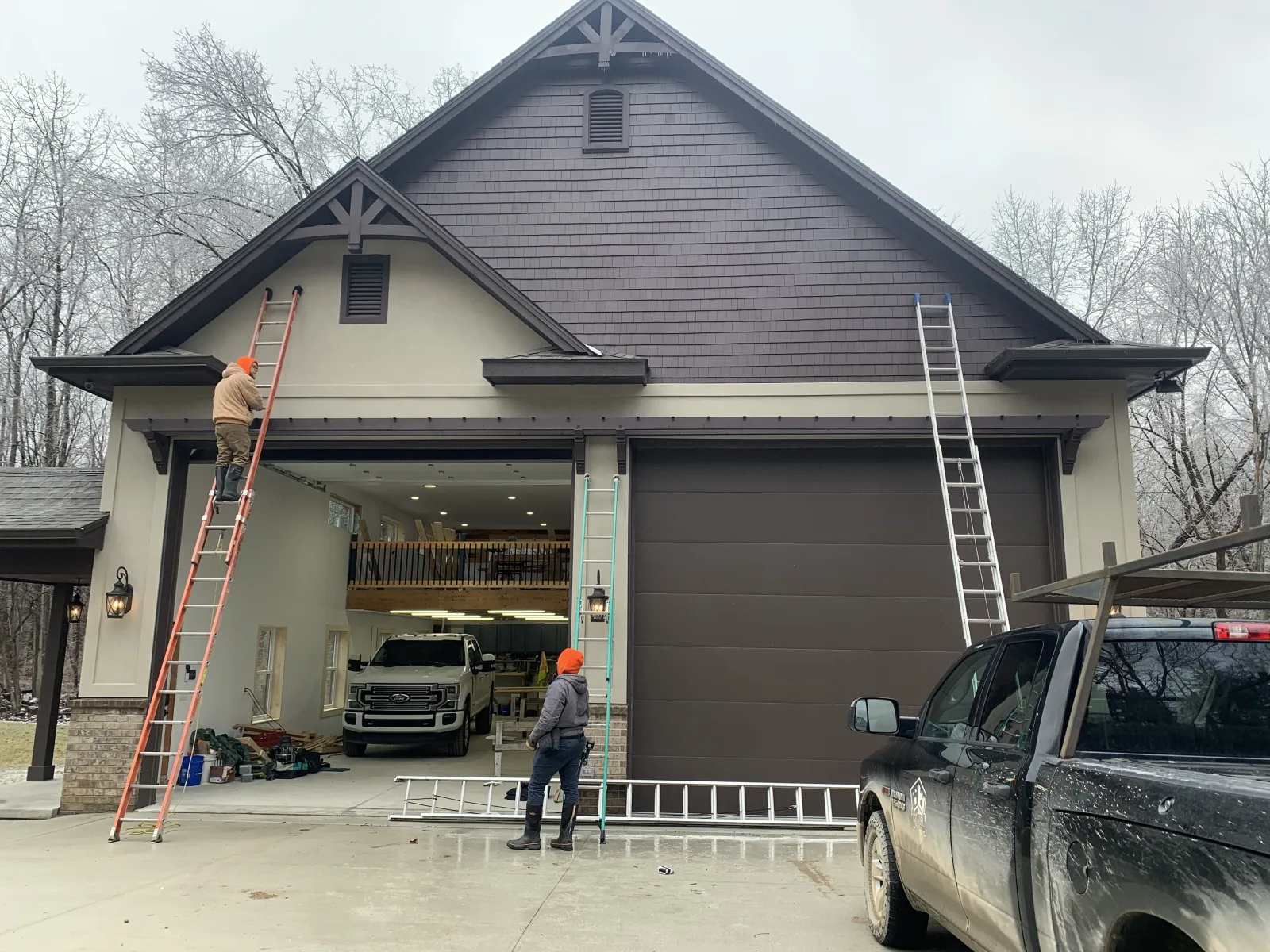
We hold roofing, siding and gutters in one scope with our own crew, so the exterior goes back together in the right order and one company answers for the result. Nothing gets handed to a subcontractor, which means the person who documented your damage is the person fastening the new material down. We work out of St. Johns and cover all of Ingham County, so nobody waits for an out-of-town truck to come back through.
What people ask us the morning after
Should I file a claim before anyone has looked at it?
We would rather look first. If the damage is age instead of storm, you will hear that at the house, and you can decide with real information instead of opening a claim on something an adjuster will read as wear.
Can I clean up the yard before you get here?
Photograph it first, then clear anything that is a hazard. A limb where it landed and debris that shows wind direction are both useful evidence, and both vanish the moment the brush pile goes to the curb.
How long can a tarp stay on?
A properly fastened cover buys a week or two, and it is a bandage, not a repair. It gives you time to get the documentation done and the scope agreed without water running into the house meanwhile.
Storm went through and you are not sure where to start? Call us and we will cover what needs covering, photograph what needs photographing, and tell you honestly whether it is worth a claim. Reach us at (989) 900-0018 or send a note about the damage.
Water first, evidence second, repair third
One insured crew for the roof, the siding and the gutters, and documentation your adjuster can follow line by line.
(989) 900-0018 Or send us a note about your project →