
How Siding Color Actually Reads on a Michigan House
A small chip under showroom light is a fair sample of the finish and a poor sample of your house. Michigan light is flat and grey for months, and it cools blues and flattens anything subtle. Decide trim, soffit, fascia, and gutter before the field color, treat the roof and any brick that stays as fixed, and look at a big sample on the real wall at three different hours.
The chip is honest about the paint, not about the wall
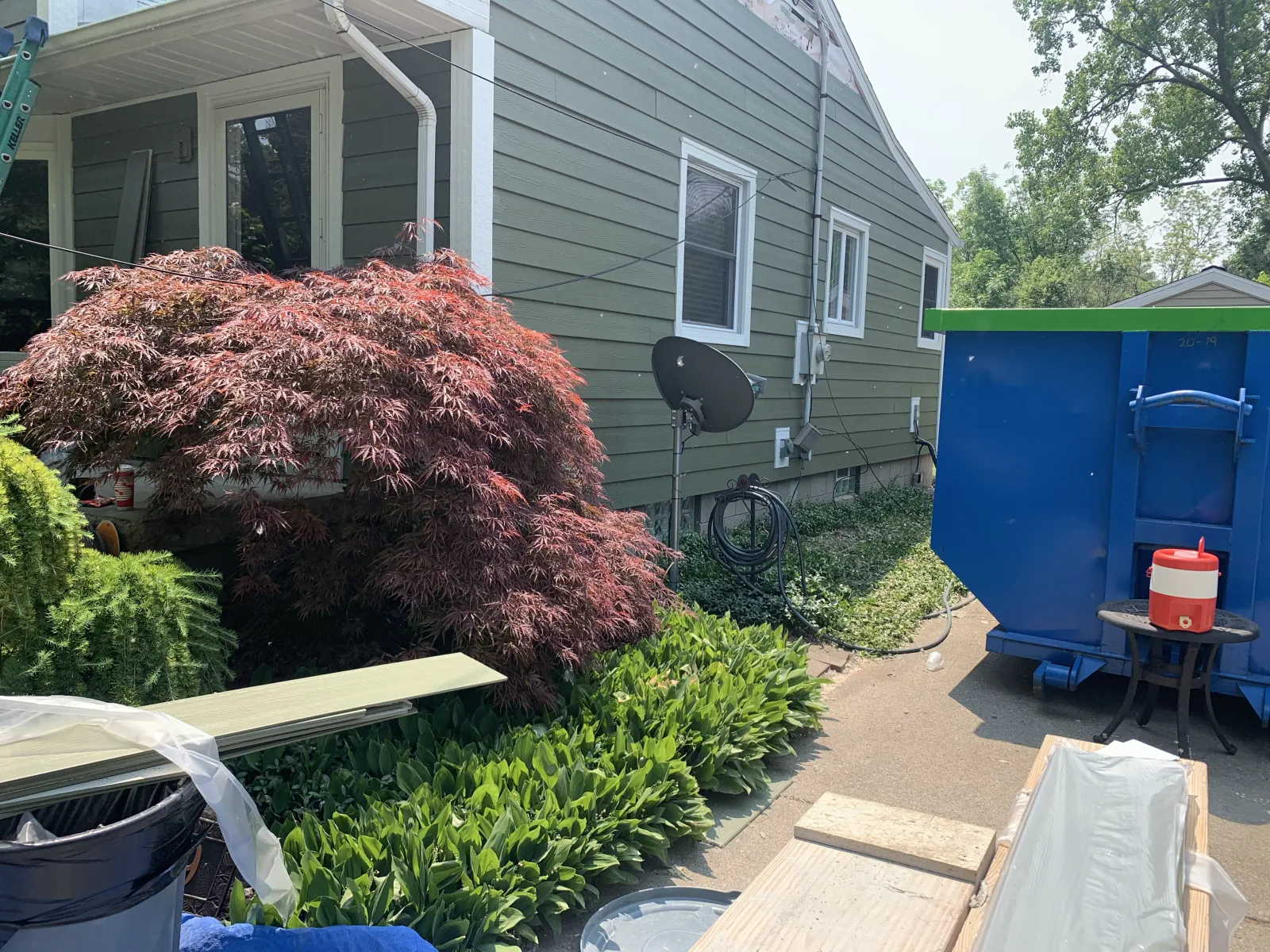
Almost every color regret starts the same way. Somebody chose from a chip the size of a business card, indoors, under warm light, against a white counter. On the house that color covers hundreds of square feet, sits beside a brown roof and a red brick chimney, and gets whatever the sky is doing. Scale alone shifts it: a color reads lighter and more saturated as the area grows, so the tasteful greige on the chip can arrive looking like a paper bag. You looked at one variable. The house has six.
Eight months of flat grey light
Mid-Michigan spends a long stretch of the year under overcast sky, and overcast light is cool and even. Tans go dusty. Soft blues go colder and often read closer to grey than blue. Greys with violet in the base start showing that violet, which is the surprise we get called about most in February. Then the sun angle drops. From November into March the light comes in low and sideways instead of down, so it rakes the wall, deepens the shadow under every course, and makes the elevation read heavier. Choose in August and expect a half step darker and cooler for much of the year.
Your north wall and your south wall are two different houses
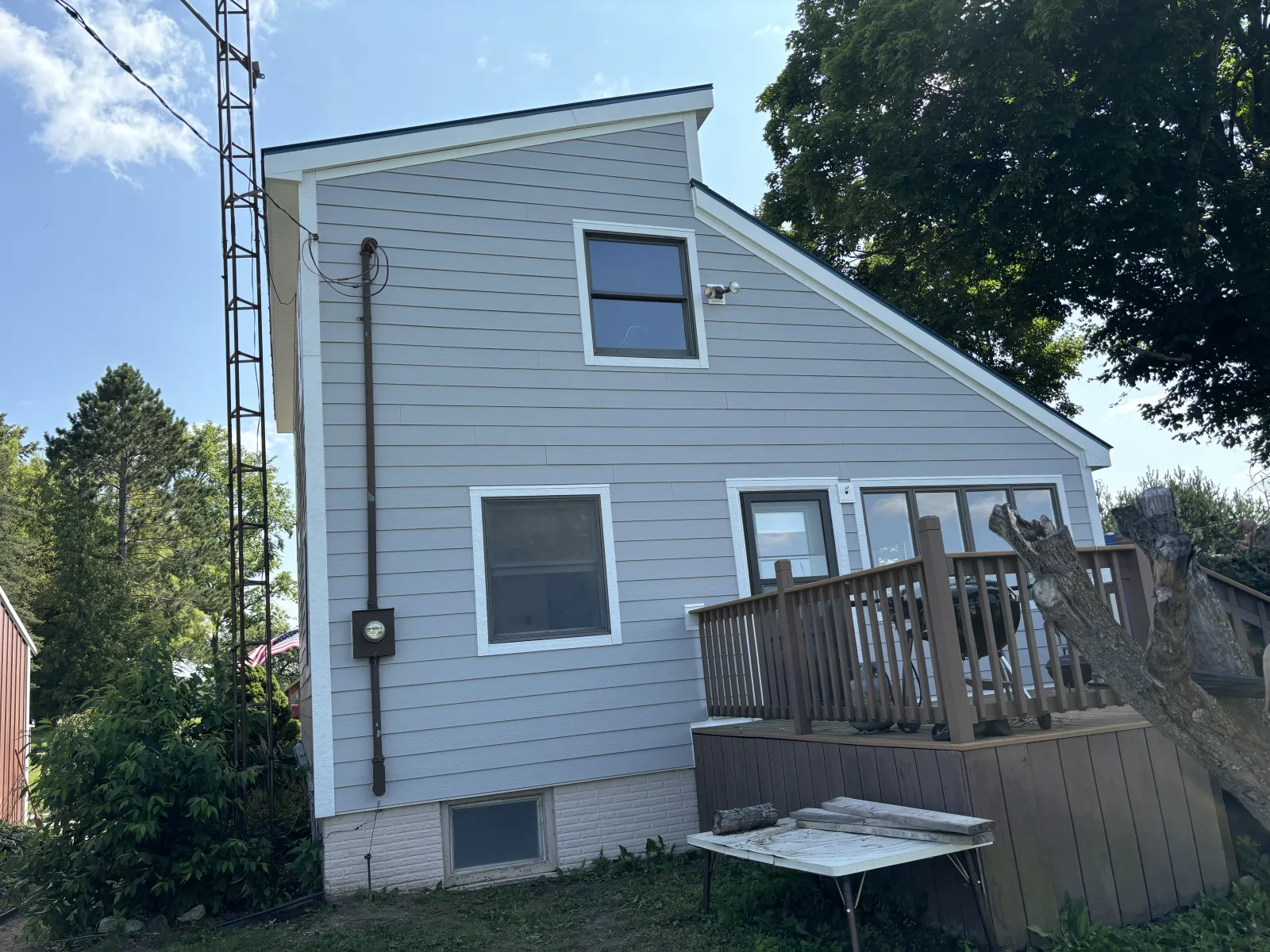
Walk the house on a clear afternoon and you will see it. The south elevation gets direct sun and shows the color at its lightest and warmest. The north side lives in ambient sky light all day, cool and blue, so the same siding sits a shade deeper and colder there. This matters most with colors near the line between two families: a warm grey that goes cold around back, a sage that reads green on one wall and grey on another. Big trees add green bounce all summer. We look at the north elevation first, because that is where a marginal color misbehaves.
What a dark color does on a big wall
Dark siding photographs well. Charcoal, deep navy, near-black, they all look sharp in a listing photo. Living with one is a different question, worth answering before you order.
Dark surfaces run hotter, and heat moves vinyl. Vinyl expands and contracts with temperature, which is why it hangs loose with room at every joint. A dark panel on a sun-blasted south wall in July works near the top of that range, and if it was nailed tight it will wave sooner than a pale one. Fade is the other piece: saturated colors show their loss of depth more plainly on the south and west. Ask what the finish is and what the warranty covers before committing a whole elevation to dark.
Trim, soffit, fascia, and gutter get decided first
Most people pick the field color and sort the trim out later. Flip that. The trim package is the frame around every window and door, the corner boards, the rake and fascia, the soffit, and the gutter along the whole eave. Added up, it is a large share of what you see from the street.
Those parts also have to agree with each other. Gutter color comes from the coil stock, soffit and fascia are separate products, and window trim may be aluminum wrap. Three slightly different whites on one elevation looks like a mistake because it is one. Settle the trim family first, confirm the gutter coil comes in it, then pick a field color that sits well against it.
The brick or the stone that is staying
Plenty of houses around St. Johns, DeWitt, and Okemos have a brick front with sided gables, or a stone water table wrapping the entry. That masonry is a given rather than an opinion. Hold your sample flat against it outdoors and read the undertone rather than the color name. Much mid-century Michigan brick carries orange or pink, while newer stone veneer runs grey and buff. Matching masonry with siding rarely works, because getting close and missing looks worse than not trying. Pull one quiet tone from the mortar and step well off it, or contrast on purpose. The near miss reads as an accident.
The roof is already one of your colors
If the roof has years left, its color is fixed, and it is a big flat plane sitting right above the siding. Weathered wood and the browns are warm and forgive warm siding. True charcoal and slate are cool and sit better with cool greys, blues, and crisp white. A blue-grey wall under a brown shingle is a fight you notice every time you pull in the driveway. When roof and siding are both being done, plan them as one decision. Otherwise photograph the roof in daylight and carry the sample to it.
Choose the color you still like on a grey Tuesday in February, not the one that looked best in the showroom.
Factory finish locks it in, paint keeps it open
Diamond Kote is prefinished LP SmartSide, coated in a controlled factory setting rather than on your wall, and it carries a thirty year no-fade warranty tied to that finish. Painting over it later is something people do, and the moment you do you own a painted wall and the repaint cycle the product was built to spare you.
Paintable fiber cement and primed engineered wood run the other way. You commit to less now and can change your mind in ten years, at the cost of a repaint every so often. Neither is smarter. It comes down to whether you would rather settle the question or keep the option open.

Order the big sample and live with it a week
This is the step that prevents almost every regret. Get the largest sample the manufacturer offers, ideally a full board rather than a card. Hold it flat against the actual wall, in the plane the siding will sit in, never tilted up toward the sky.
Look at it on the north wall and the south wall, at nine in the morning, mid afternoon, and in the last hour of daylight. Look on an overcast day, because that is the light your house wears most of the year here. Set it against the brick, under the roof line, and beside the trim and gutter samples.
How much your street should decide
Knowing your street is useful. If every house on the block is a soft neutral and yours goes deep forest green, that is a real choice with real consequences, some of them good. Standing out is fine when you mean it, though the buyer pool for a bold exterior is smaller if you plan to sell soon. What we would not do is let the neighbors decide for you. Matching four other houses is a safe outcome rather than a good one.
Where we come in
We bring samples, walk your elevations, and say honestly how a color will behave on your walls. If a shade is going to disappoint you on the north side, we say so before you order. We don’t take people’s money for work they don’t need, and we won’t sell you a color we think you’ll dislike in January.
When the color is settled, our own crew does the install, start to finish. You get a fair price in writing with the trim, soffit, fascia, and gutter spelled out, so nothing gets decided by default on install day. Send us a note about your project and we will set up a free inspection. We don’t quote siding off a photo, so we come look at the house.
Common Questions
Will the color look the same on the whole house as it does on the sample?
It will look lighter and more saturated at full scale, and it will shift with the elevation and the weather. A large sample on the actual wall, seen at several hours, is the only reliable preview.
Should the trim match the roof or the siding?
Neither by default. Trim works best as its own decision that agrees with both, and the gutter, soffit, and fascia should be confirmed available in that color family before anything is ordered.
Are dark siding colors a bad idea in Michigan?
No, though they are less forgiving. Dark surfaces run hotter, which matters most with vinyl since it needs room to expand. Use quality product, insist on correct clearances, and ask what the fade warranty covers.
Can Diamond Kote color be changed later?
The finish is applied at the factory and the no-fade warranty covers that finish, so treat it as a one-time choice. You can paint over it later, though you then take on a repaint schedule.
What if my brick or stone is staying?
Treat it as fixed and choose around it. Match the undertone of the mortar or the palest stone and step away from it, or contrast clearly on purpose. A near miss looks like an error from the street.
Bring the samples to the wall with us
Call the crew and we’ll walk your elevations, talk color and trim honestly, and put a fair price in writing.
(989) 900-0018 Or send us a note about your project →