
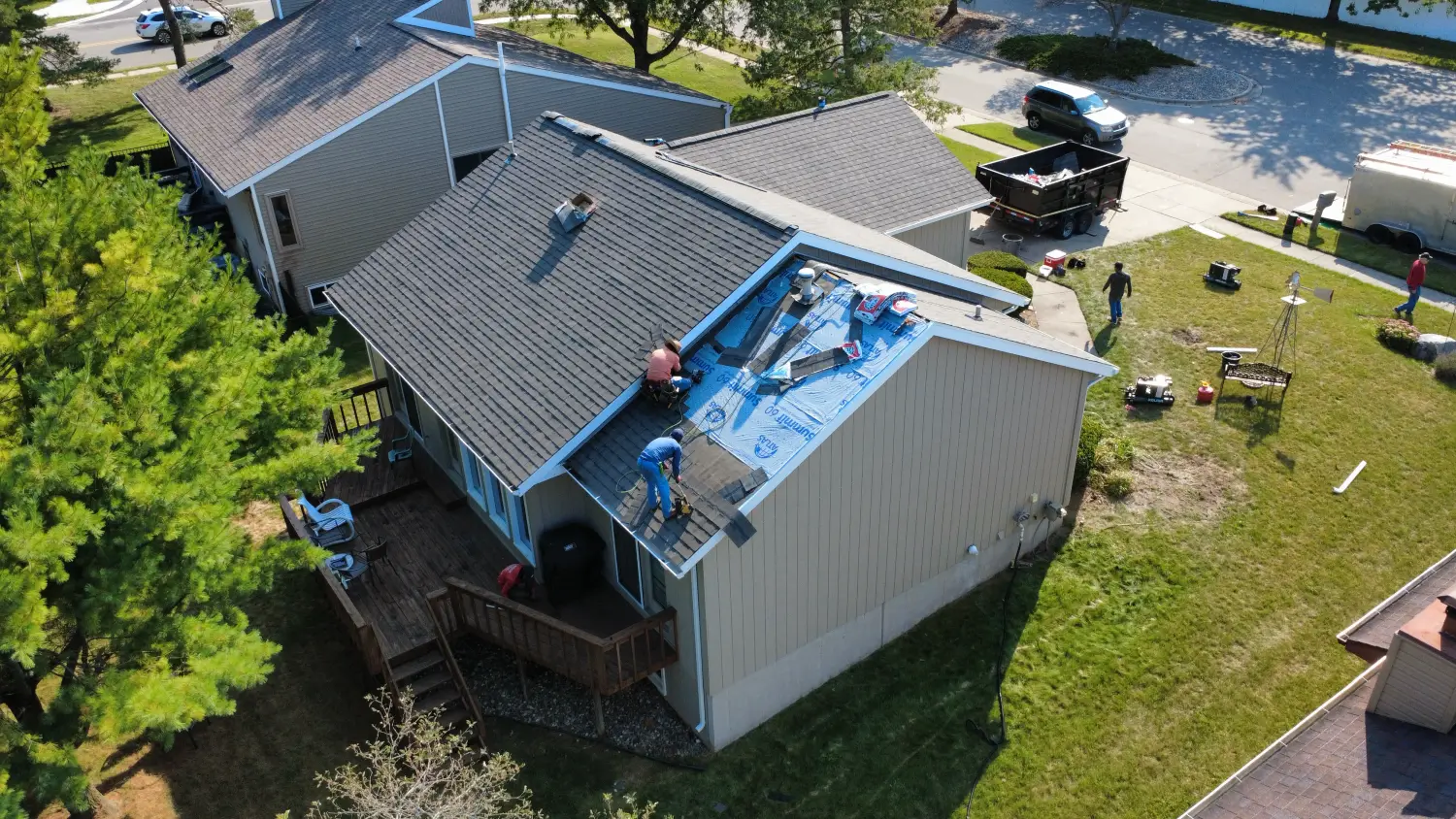
What a Mature Oak Canopy Does to the Roof Underneath It
The old oaks are half the reason people buy in Okemos, and they are also why roofs on those streets wear unevenly. The canopy keeps valleys loaded and gutters full, shade holds moisture against shingles, and limbs work at the surface every windy day. None of this means cutting your trees down. It means knowing which parts of your roof the canopy is aging fastest.
Two houses on the same street, two different roofs
Drive the wooded blocks off Okemos Road, or the older streets tucked back toward Marsh and Hamilton, and you will see roofs of the same age in wildly different shape. One house sits in the open and its shingles look their years. The house four doors down sits under a pair of oaks that were probably there before the subdivision, and its north slope is dark green, its valleys are packed, and the gutters have a little garden growing in them.
Same shingles, same weather. The difference is the canopy. Trees change how fast a roof ages, and they do it where you cannot see it from the driveway.
The canopy drops something on your roof every month of the year
People think of leaf load as an October problem. Under mature oaks it runs all year. Spring brings catkins and the seed fluff off nearby maples, which mat into a felt that plugs a downspout faster than leaves ever will. Summer brings twig drop after every storm. Fall brings the leaves, and oaks hold theirs late, so you get a second round after your neighbor has put the rake away.
Where it lands matters more than how much of it there is. Valleys are the drainage channels of the whole roof, and they are exactly where debris collects. A packed valley stops moving water and starts holding it. Water sitting there works under the shingle edges, into the nail line, and on the underlayment. That is what we get called out for on wooded lots more than anything else, and it rarely starts as a shingle problem. It starts as a drainage problem the shingles could not survive.
Why the shaded slope wears out before the sunny one
On a heavily shaded roof, the north and northeast slopes stay damp. Dew burns off late or never. Moss and algae take hold, and once moss has a footing it does something worse than look bad: it lifts. It grows in the seam between courses and pries the shingle edge up, and every bit of lift is a place water can get behind. Algae is less destructive, but it tells you the slope is not drying.
The result is a roof that fails in patches. The south slope looks fine. The shaded slope is soft, streaked, and shedding. Homeowners cannot understand why one side has given up while the roof is only partway through its life. That is the canopy working on the side that never gets sun.
A shingle that never dries loses its granules faster. On wooded lots the roof does not wear out evenly, it wears out in patches.
Pressure washing it off is the instinct, and it is the wrong move. High pressure strips granules faster than moss ever would. Gentle treatment and thinning the limbs that make the shade are the honest answers.
Limbs: the rubbing you hear, and the strike you do not
Two separate problems get lumped together as tree damage. The first is abrasion. A limb that touches the roof in a breeze sands the same patch of shingle every windy day for years. The worn stripe is easy to spot because it is cleaner than the shingle around it, granules polished off and the mat showing through. Cut those limbs back so they clear in a real wind, not on a calm afternoon.
The second is the strike. A dead limb high in an oak does its damage in one second rather than over five years, and a heavy one puts a hole clean through the decking. If you can see deadwood over your roofline, have an arborist deal with it before winter loading and spring wind do.
Squirrels get to the fascia before you do
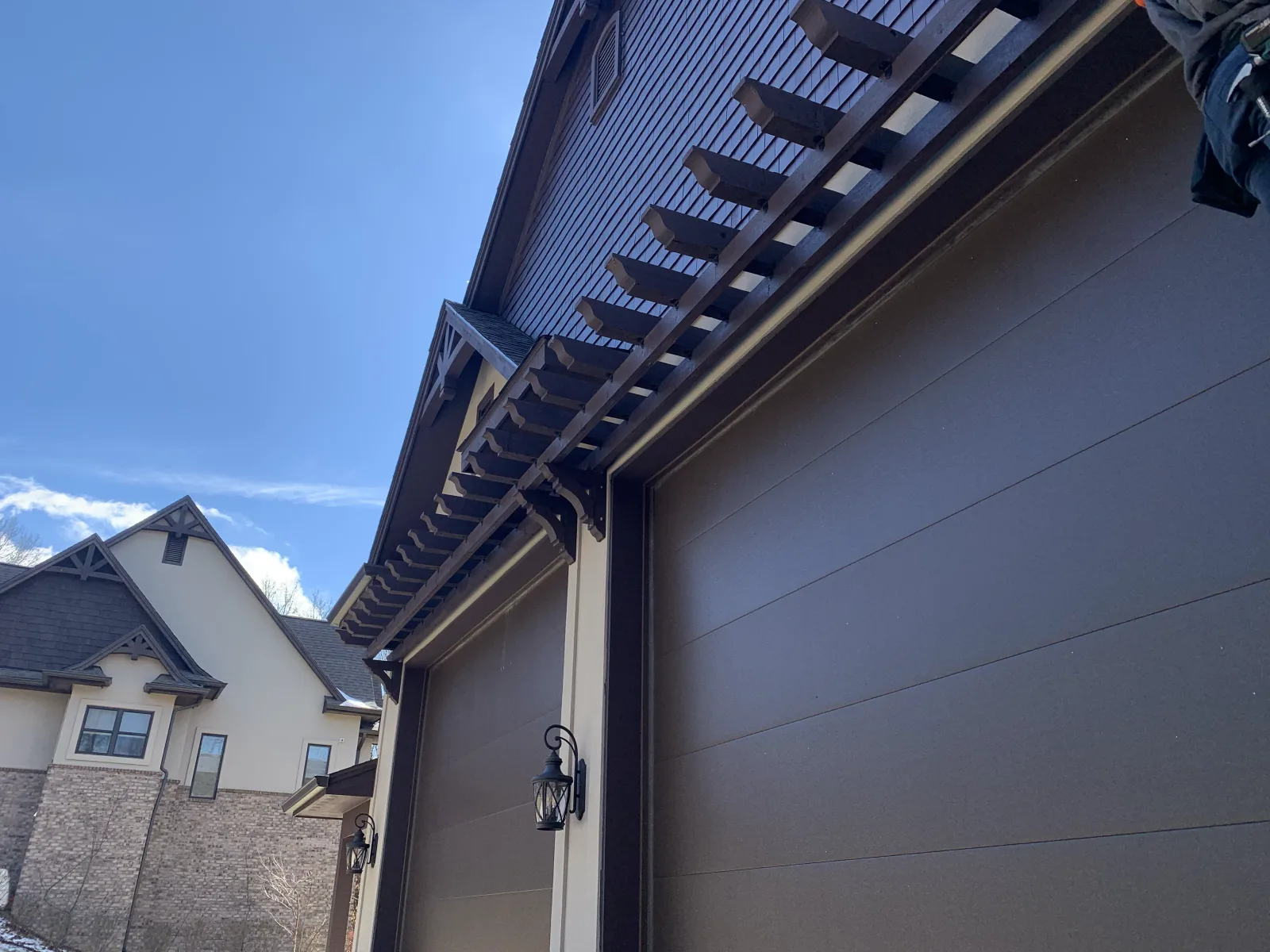
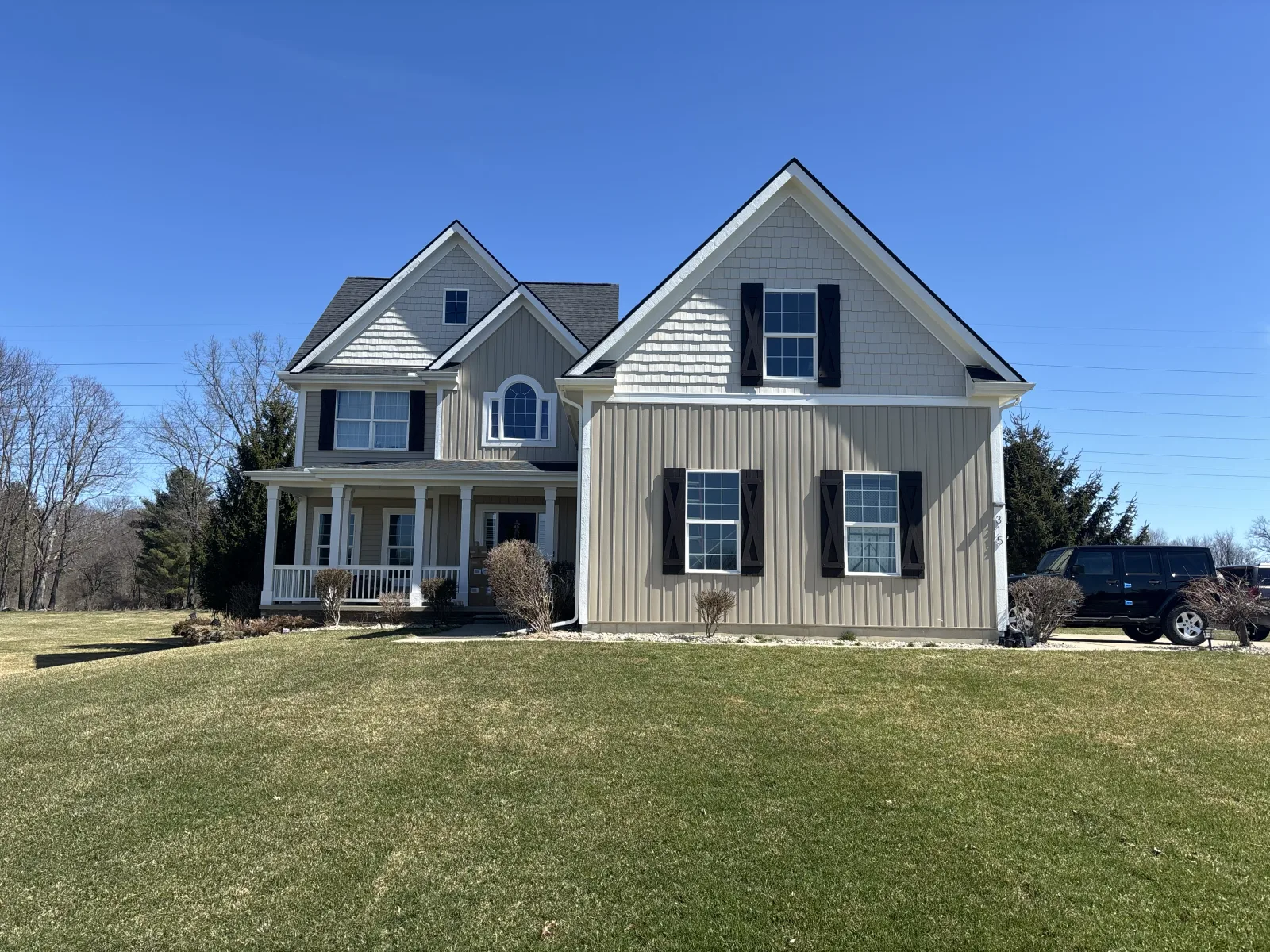
Overhanging limbs are also a bridge. Squirrels use them to reach the roof, and once they are up there they look for a soft edge. The usual entry points are the fascia behind the gutter, the corner where the gutter meets the roof edge, and any soffit panel water has already softened. Softened wood gives way fast, and a squirrel is into the soffit cavity in an afternoon.
The tell is noise overhead, or a gutter corner that suddenly looks chewed and ragged. The repair is straightforward if you catch it and expensive if you do not, because animals in a soffit cavity find the insulation and the wiring. Trimming the limbs back removes the bridge.
Guards that survive oak, and guards that make it worse
Homeowners on wooded lots ask about gutter guards more than anyone else, and the honest answer is that the product matters a lot here. Guards with large openings or plastic mesh handle whole oak leaves and then fail against the small stuff. Maple seed fluff and oak catkins mat on top of a coarse screen and turn the run into a lid. Water sheets over it, and now you have a covered gutter that hides the fact that it is plugged.
What works under heavy canopy is fine stainless micro mesh over a rigid frame, set with the pitch right and cleaned on a schedule. No guard is maintenance free under oaks. A good one turns a ladder-and-scoop job three times a year into a rinse once a year. We say that plainly, because a guard sold as permanent under a mature canopy will disappoint you. And if the gutters are undersized for the load to begin with, no guard saves them, so a proper gutter replacement sized to the roof is the conversation worth having.
What to walk around and look at after a windy week
You do not need to get on the roof. Stand back on the lawn on all four sides and look. Fresh twigs or limb sections on the roof or in the yard. Shingle granules washed into a pile at the bottom of a downspout, which means something up there is shedding. A gutter run sagging or pulling away under weight it was never meant to hold. Water stains down the fascia or siding under a gutter joint. A valley you can see debris packed into from the ground.
Then step inside and look at the ceiling under the shaded slope and along any valley, because that is where a slow leak shows first. Most of what we find after a windy week on a wooded lot is a small shingle roof repair caught early, which is a very different day than the same problem found in March after it has run down a rafter all winter.
When the tree work should come before the roof work
This is the part we are firm about. If limbs are touching or hanging over your roof, get the tree work done first. There is no sense putting new shingles under a limb that will start sanding them the following week. We would rather push your project a few weeks and have you call an arborist than take your money now and watch a new roof pick up damage before its first winter.
That is how we handle every job. We tell homeowners straight what the house actually needs, and we never subcontract; our own crew is on the roof. If you want someone to look at what the canopy has done to your Okemos roof and gutters, we will do a free inspection and give you a fair price in writing for the parts that genuinely need attention. Call us at (989) 900-0018 or send us a note about your project.
Common Questions
Do I have to cut down my trees to protect my roof?
Almost never. What matters is clearance and deadwood. Limbs that touch or hang over the roof should be cut back, and dead limbs above the roofline should come down. Thinning the canopy also lets a shaded slope dry, which slows moss.
Why is only one side of my roof covered in moss?
That side is shaded and stays damp. North and northeast slopes under a canopy dry late or never, and moss takes hold in the seams between courses and lifts the edges. It is why wooded lots get roofs that fail in patches.
Should I pressure wash the moss off my shingles?
No. High pressure strips granules faster than the moss does and takes years off the roof in an afternoon. Gentle treatment plus limb thinning to get sun and airflow on that slope is the way to handle it.
Do gutter guards work under mature oaks?
Some do. Coarse screens and plastic mesh clog worse than no guard at all, because catkins and seed fluff mat on top and water sheets over. Fine stainless micro mesh over a rigid frame holds up, though nothing under oaks is maintenance free.
What should I check after a windy week?
From the ground: fresh limbs on the roof, granules piled at a downspout, a sagging gutter run, stains on the fascia, debris packed into a valley. Inside: ceilings under the shaded slope and along valleys.
Can squirrels really get in through the gutter area?
Yes, and overhanging limbs are how they reach the roof. They work on the fascia behind the gutter and on soffit panels water has already softened. Trimming the limbs back removes the bridge.
Roof living under a heavy canopy?
We will do a free inspection, tell you straight what the trees have done, and put a fair price in writing.
(989) 900-0018 Or send us a note about your project →