
The Storm Insurance Claim Process for Lansing Homeowners, Step by Step
A wind or hail claim in Lansing runs in a set order: document the damage and date, get a roof-level inspection, understand your deductible, file, meet the adjuster, and restore what’s approved. Most homeowners do this once or twice in a lifetime. We do it constantly, and a contractor who handles the documentation and the adjuster meeting takes most of the stress out of it. The one thing to get right first is understanding what your deductible actually is.
Why the claim is really about documentation
When a summer storm rolls through Lansing and lifts shingles or drops hail, the part that decides how your claim goes isn’t the damage itself, it’s how well the damage is documented. Insurance covers what a storm did, and it pays on evidence: dated photos, a detailed roof-level inspection report, and a written scope your adjuster can check line by line. A claim with thin documentation gets underpaid or denied. A claim built on a thorough, photographed inspection gets seen for what it is. That’s the single biggest lever a homeowner has, and it’s the one most people don’t know to pull.
This is exactly where a lot of Lansing homeowners get tripped up. They call their insurer first, before anyone has actually been on the roof, and start a claim on a hunch. Or they do quick repairs to stop a drip and accidentally erase the evidence the claim needed. The better order is to get the roof properly inspected and documented first, so that when you do talk to your insurer, you and they are looking at the same clear picture of what the storm did.
Step one: understand your deductible before anything else
The first thing to know, and the thing that catches Lansing homeowners off guard at the worst moment, is what your wind-hail deductible actually is. Plenty of policies carry a percentage deductible tied to the home’s insured value rather than a flat number, and people discover that only when they’re already staring at storm damage. Dig out your policy, find the deductible, and know it before you decide anything. Whether a claim makes sense at all turns on how the covered damage compares to that number, so you can’t judge the claim without it.
This matters because not every storm is worth a claim. If the damage is small and cosmetic and sits below or near your deductible, filing can cost you more in future premiums than the repair is worth. If the damage is real and clearly exceeds the deductible, a claim usually makes sense. Knowing your deductible is what lets you, and us, tell the difference honestly instead of guessing.
Step two: the roof-level inspection
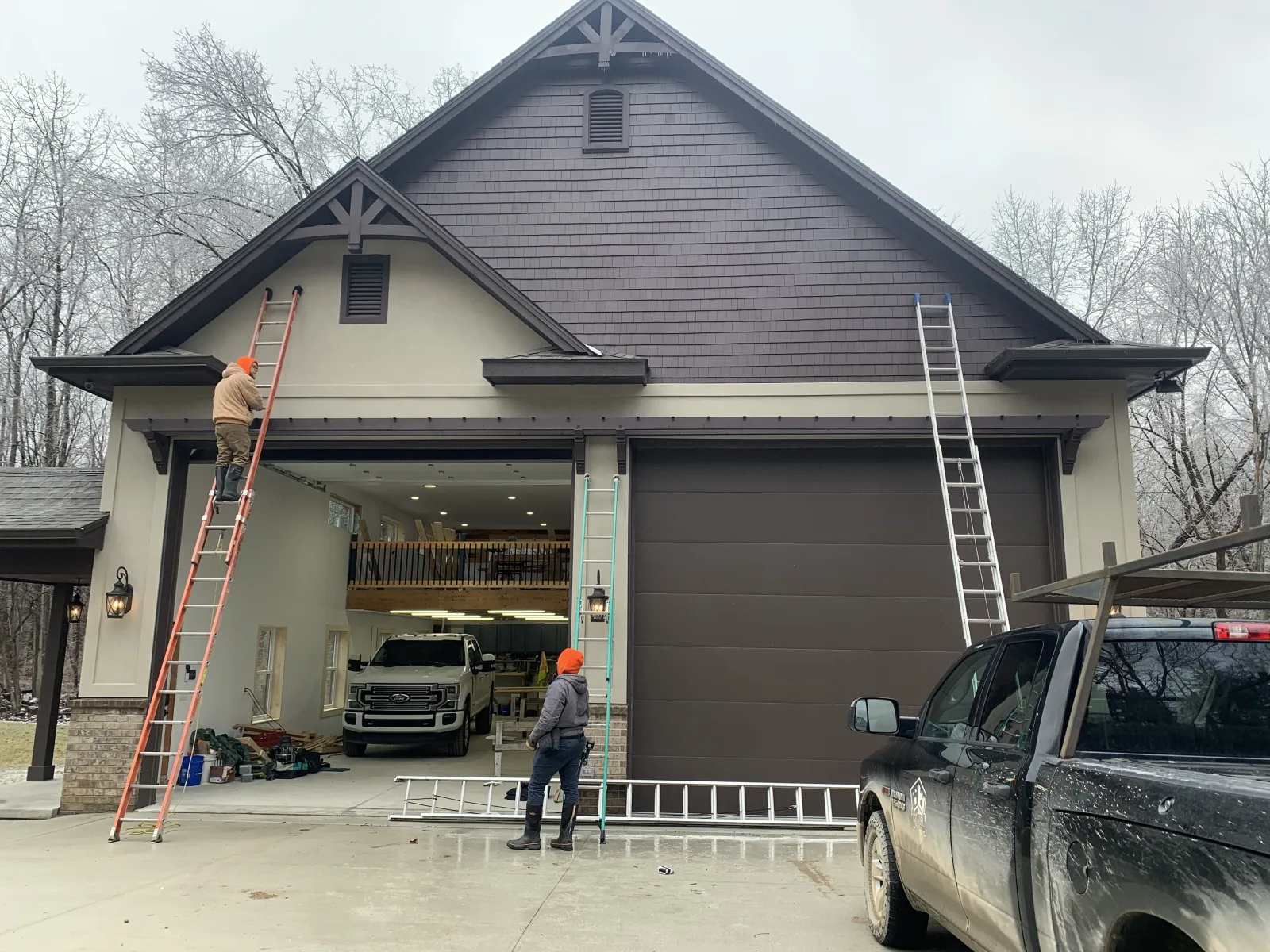
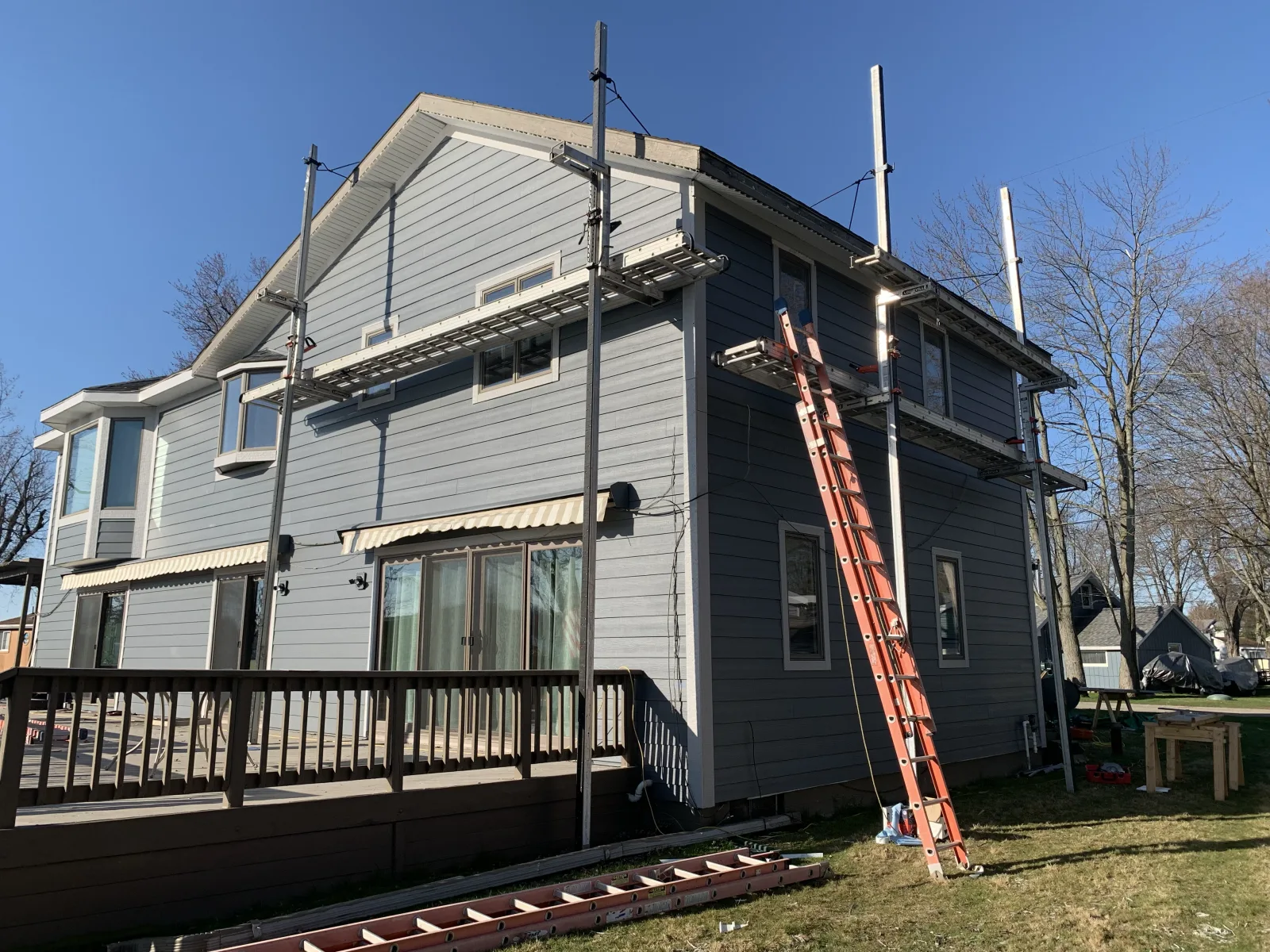
Next comes the inspection, and it has to be at roof level, not from the ground. A great deal of storm damage in Lansing is invisible from the driveway: straight-line wind can break the seal that holds shingles down without a single one visibly gone, and hail bruises and fractures shingles in ways you simply cannot see from below. A ground look misses most of it. Someone on the roof, marking every hail strike and wind crease and photographing each slope, is what turns a vague suspicion into a documented claim.
When we inspect a Lansing roof after a storm, that documentation is the deliverable. We hand you a written scope your adjuster can follow line by line, backed by photos of the actual damage. And we tell you the honest verdict: whether the storm did enough to warrant a claim, or whether it didn’t. We won’t push a marginal claim, because filing one you don’t need can raise your premiums for years.
Insurance pays on evidence. A claim built on a photographed, roof-level inspection gets seen for what it is; a claim built on a hunch gets underpaid.
Step three: filing and the adjuster visit
If the damage warrants it, you file the claim with your insurer, using the documented report as the backbone. The insurer then sends an adjuster to inspect the home and settle the scope of what’s covered. This is a pivotal moment, and it goes better when your contractor is there. We’ll meet the adjuster on the roof if you want, so the conversation happens over the actual damage instead of over the phone, and so nothing real gets missed in the walk. Having someone who does this constantly standing next to someone who does it all day is how the scope comes out fair.
Once the adjuster and your contractor agree on the scope and the insurer approves it, the work is scheduled and done. We restore exactly what’s approved, to manufacturer spec, with our own crew, and we handle the paperwork on the back end so you’re not chasing it. Anchor is fully licensed and insured and carries full general liability coverage, so your home and our crew are protected while the restoration happens.
The storm-chaser trap
There’s one more thing every Lansing homeowner should know about storm claims, because it’s where a lot of people get burned. After a big hail night, out-of-town crews canvass the neighborhood, knock on doors, and write fast contracts. They promise to handle everything, they inflate scopes, and when the punch list comes due they’ve moved on to the next storm three states away. The claim gets messy, the work is questionable, and there’s nobody local to stand behind it the following winter.
The protection against that is simple: work with a contractor who lives here, whose crew is their own, and who’ll be around after the storm. We’re in mid-Michigan year-round, and the storm restoration we do carries the same name as every other roof we put on across the Lansing area. When you can find a company’s work on a hundred other local homes, that’s worth more than any door-knocker’s promise. You can read more about how we handle storm restoration and everything we do across Lansing.
Get ready before the next storm
A little preparation makes the whole process easier. Know where your policy lives and what your wind-hail deductible is, before you need it. Keep a few current photos of your roof and siding on your phone, refreshed once a year, so you can show an adjuster the before next to the after. And save a local number so that after a big storm, when the calls stack up fast, you reach someone who’ll get you documented and scheduled while the storm chasers are still knocking on doors. The homeowners who move quickly on protection and deliberately on decisions come out of storm week in control of the process instead of at the mercy of it. Call the crew at (989) 900-0018 and we’ll walk your Lansing roof honestly, whether or not there’s a claim in it.
Common Questions
Should I call my insurer or a contractor first after a Lansing storm?
Get the roof properly inspected and documented first. Calling your insurer before anyone has been on the roof means starting a claim on a hunch. A roof-level inspection gives you and your insurer the same clear picture, which makes the whole claim go smoother.
How do I find out my deductible?
It’s in your homeowner’s policy. Find it before you decide anything, because whether a claim is worth filing depends on how the covered damage compares to it. Watch for a percentage wind-hail deductible tied to your home’s value rather than a flat number, which surprises a lot of Lansing homeowners.
Will you meet the insurance adjuster at my home?
Yes, if you’d like. We’ll meet the adjuster on the roof so the conversation happens over the actual damage rather than over the phone. Having your contractor there alongside the adjuster is how the scope comes out fair and nothing real gets missed.
Is it worth filing a claim for minor storm damage?
Often not. Small cosmetic damage that sits near or below your deductible can cost more in future premiums than the repair is worth. We give you an honest read before you file so you don’t burn a claim on something minor, or miss one that’s genuinely worth it.
How do I avoid storm-chaser contractors?
Be wary of out-of-town crews that knock the day after hail, write fast contracts, and can’t point to local work. Work with a contractor who lives here and whose crew is their own. We’re in mid-Michigan year-round and stand behind our work the winter after the storm.
Storm hit your Lansing home?
Call the crew for a free, no-obligation look. We’ll document the damage and tell you straight up whether a claim makes sense.
(989) 900-0018 Or send us a note about your project →