

Why Hail Damage to Your Roof Is Often Invisible From the Ground
Hail bruises and fractures shingles and knocks off the protective granules that shield them from the sun, damage that rarely leaks right away but shortens the roof’s life and leads to leaks later. It’s almost impossible to see from the ground, which is why a roof-level inspection after a hailstorm is the only way to know what you’re dealing with.
The sneakiest storm damage
Of all the storm damage we deal with across mid-Michigan, hail is the sneakiest, because the worst of it is invisible from the ground. After a hailstorm, a lot of homeowners look up, see no missing shingles, and assume the roof is fine. Then a season or two later they’ve got a leak, and the hail is why.

What hail actually does
Hail fractures the shingle mat and knocks off the granules, the gritty protective layer that shields the asphalt from the sun. Even when it doesn’t punch a hole or cause an immediate leak, that damage accelerates aging and creates weak points where leaks start later. On metal roofs, flashing, and vents, hail leaves dents that can compromise seals.
The bruised spots and granule loss that tell the story are hard to see from the driveway. You often need to be on the roof, looking closely, to find them, which is exactly why hail damage gets missed.
Why it matters for your claim
Hail is a common covered peril on homeowner’s policies, and hail claims often have a filing window. If you wait until the damage causes a leak, you may be past the window and paying out of pocket for damage insurance would have covered.
That’s why we recommend a proper inspection after any significant hailstorm, even if the roof looks fine from below. We document what the hail actually did, and if it didn’t do enough to warrant a claim or repair, we’ll tell you that honestly, too.
Hail bruises and fractures shingles and knocks off the protective granules that shield them from the sun, damage that rarely leaks right away but shortens the roof’s life and leads to leaks later.
What to do
If your area took a hailstorm, have your roof inspected at roof level, not from the ground. We’ll get up there, find the bruising and granule loss you can’t see, document it properly for insurance if it’s warranted, and give you a straight answer about whether your roof needs attention now.
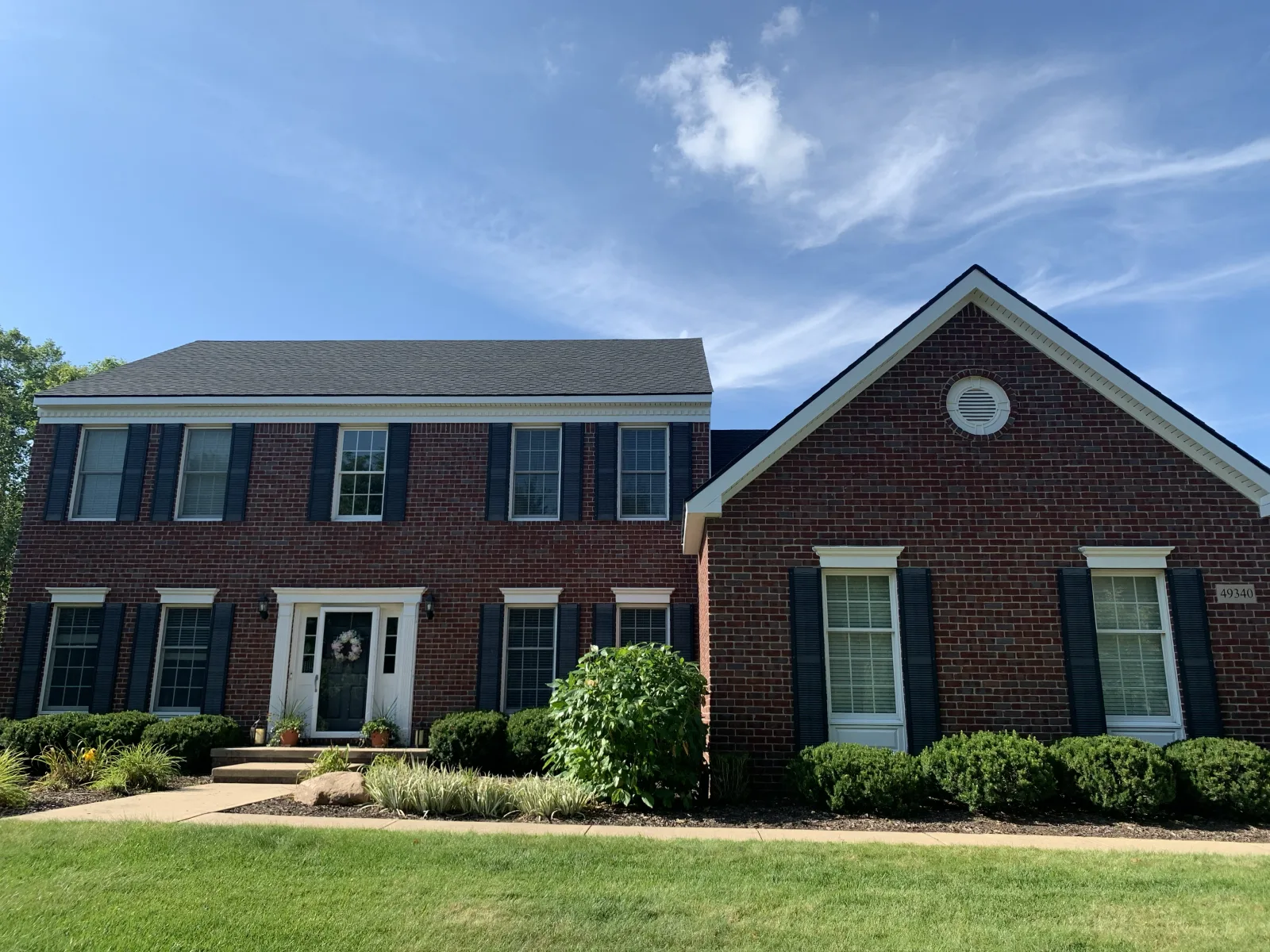
What a hail strike does to a shingle over time
A hail strike is a bruise, not a hole. The impact crushes the granule layer into the asphalt beneath it and breaks the fiberglass mat’s bond in a spot the size of a coin. Nothing leaks that afternoon. But the bruised spot sheds its granules over the following seasons, the exposed asphalt bakes and cracks in the sun, and a few winters of freeze-thaw finish the job.
That delay is why hail claims have time windows. By the time the roof actually leaks, often two or three years later, the storm that caused it can be too old to claim. The inspection right after the storm is what preserves your options.
Wind adds its own quiet damage in the same storms: creased shingles that lifted and folded, and broken seal strips that let the next big gust peel shingles off in rows. None of that shows from the ground either.
What an honest hail inspection covers
We walk every slope and look at the roof the way an adjuster will: strike density per test square, bruising you can feel under your fingers, granule loss in the gutters, and collateral hits on the soft metals, the vents, flashing, and gutters that dent honestly and corroborate the roof’s story.
You get photographs of everything we find, marked and dated, whether the verdict is a claim, a repair, or nothing at all. Roughly a third of the hail inspections we run end with us telling the homeowner their roof is fine, and we consider those good visits.
If the damage is real, we document it to insurance standard and stay with the claim through the adjuster meeting and the build. One crew, one name, from the first ladder to the last shingle.
Timing tip from plenty of hail seasons: book the inspection even if your neighbors’ roofs look fine. Hail falls in narrow, strange swaths, and we have marked heavy damage on one side of a street while the other side had none. Your roof’s story is its own.
When filing is worth it, honestly
A hail claim makes sense when the documented damage exceeds your deductible by enough to matter, and not before. If we find scattered strikes worth a few hundred dollars in repairs against a two-thousand-dollar deductible, we will tell you to keep your claim history clean and let us fix it directly.
When the damage is real and widespread, the claim is what insurance exists for, and the difference between a smooth one and a painful one is almost entirely documentation. Marked photos of every slope, strike counts per test square, the collateral evidence on vents and gutters, and a written scope the adjuster can verify on the roof.
That standard of documentation is what we bring to every hail inspection, including the ones that end with us telling you not to file. The point is that the decision gets made on evidence, with your interests in front, and you will have the photographs either way.
If a storm dropped hail anywhere near your address this season, put the inspection on this week’s list rather than next year’s. The damage does not heal, the claim window does not stretch, and the twenty minutes it takes us to walk your roof costs you nothing either way. Worst case, you get photographic proof your roof is fine, which is worth having in a folder the next time a stranger with a clipboard says otherwise.
Common Questions
Can I see hail damage from the ground?
Usually not, that’s what makes hail dangerous. The bruising and granule loss that shorten a roof’s life are hard to see from the driveway. A roof-level inspection is the only reliable way to find hail damage.
Does hail damage need immediate repair?
It’s not always an emergency like an active leak, but it shouldn’t be ignored. Hail-bruised shingles and granule loss shorten the roof’s life and lead to leaks later, so addressing it and filing any warranted claim before it worsens is smart.
Is hail damage covered by insurance?
In most cases yes, hail is a common covered peril. Whether a claim is worth filing depends on the extent of the damage and your deductible, and claims often have a filing window, so don’t wait too long to inspect.
What does hail do to shingles?
It fractures the shingle mat and knocks off the protective granules that shield the asphalt from the sun. This accelerates aging and creates weak points where leaks begin, even when there’s no immediate hole.
Should I get my roof inspected after a hailstorm?
Yes, even if it looks fine from the ground. A roof-level inspection finds the hidden damage and documents it for a potential claim before the filing window closes or the damage causes a leak.
Want an honest look at your roof?
Call the crew for a free, no-obligation assessment. We’ll tell you straight up what your home needs.
(989) 900-0018 Or send us a note about your project →