
Storm Damaged Your Roof? Here’s Exactly What to Do Next
After a storm: contain any active leak first, then get the roof properly inspected, a lot of storm damage, especially hail, isn’t visible from the ground. Document everything, and if the covered damage exceeds your deductible, file an insurance claim. We handle the inspection, the repair, and the claim paperwork so you’re not doing it alone.
First, stop the water
If a Michigan storm has damaged your roof and you’ve got an active leak, the first priority is containing the water, buckets under the drip, and move anything valuable out of the way. Then call for an emergency leak stop. Getting the water out fast prevents a bad day from turning into ruined ceilings, insulation, and framing.
Get it properly inspected
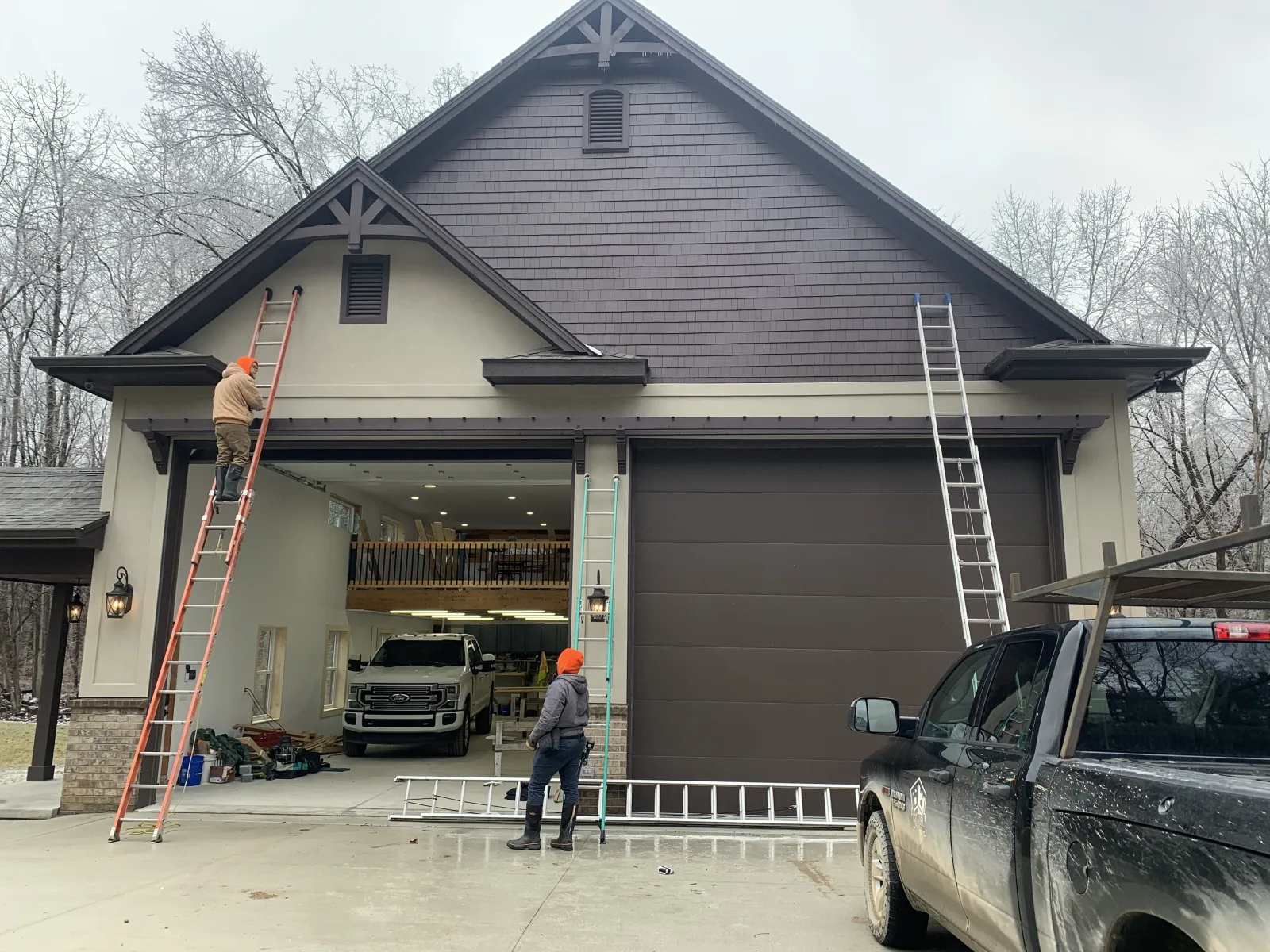
Here’s what most homeowners don’t realize: a lot of storm damage isn’t visible from the ground. Wind can break the seal that holds shingles down without removing them, and hail bruises and fractures shingles in ways you can’t see from the driveway. That damage doesn’t leak today, but it shortens the roof’s life and leads to leaks a season or two from now.
That’s why a proper roof-level inspection after a storm matters. We come out, get on the roof, and document exactly what the storm did, the visible damage and the damage you can’t see. And we’ll tell you honestly if the storm didn’t do enough to warrant a claim or a repair.
Document everything
Insurance claims live or die on documentation. Photos of the damage, the date of the storm, and a detailed inspection report are what a covered claim needs. We document thoroughly as part of the inspection, so if you do file, your insurer sees exactly what the storm did.
Don’t do repairs beyond emergency water containment before the damage is documented, you want the evidence intact for the claim.
After a storm: contain any active leak first, then get the roof properly inspected, a lot of storm damage, especially hail, isn’t visible from the ground.
Should you file a claim?
Not every bit of storm damage is worth a claim, and we’ll tell you straight. If the covered damage significantly exceeds your deductible, a claim usually makes sense. For small, cosmetic damage, it often doesn’t. We give you an honest assessment before you file so you don’t burn a claim on something minor, or miss one worth filing.
If you do file, we handle the insurance claim with you: providing the report your insurer needs, meeting the adjuster, and restoring exactly what’s approved. The goal is to make a stressful process much easier to deal with.
What the insurance process actually looks like
After the storm, the sequence usually runs like this. You document the damage and the date, your contractor inspects and photographs everything, you file the claim, the insurance adjuster visits, and the scope and payment get settled before work begins. Most homeowners only do this once or twice in a lifetime, and the process is smoother when the contractor has done it hundreds of times.
Our role is documentation and honesty. We photograph every slope, mark the hail strikes and wind creases, and hand you a written scope your adjuster can check line by line. When the adjuster visits, we will meet them on the roof if you want, so the conversation happens over the actual damage instead of over the phone.
And if the damage does not justify a claim, we say so. Filing a marginal claim can cost you more in premiums than the repair is worth, and a contractor who pushes every roof toward a claim is not working for you.
Why the first week matters
Storm damage gets worse on a schedule. An open seam or a missing shingle strip lets the next rain into the deck, and wet decking turns a repair into a rebuild. Tarping or patching promptly, even roughly, freezes the damage where it is and protects your claim, because insurers cover the storm’s damage, not the neglect that followed it.
Keep every receipt from emergency work, and be careful with the crews that appear in the neighborhood the day after the hail. Storm chasers write fast contracts and disappear when the punch list starts. We live here, our crew is our own, and the work we do after a storm carries the same name we put on everything else.
One more honest note: hail and wind damage rarely announce themselves from the driveway. If a storm rolled through your area, a free inspection costs you nothing and settles the question with photographs instead of guesswork.
What to have ready before the next storm
A little preparation makes the bad week easier. Know where your policy documents live and what your wind-hail deductible actually is; plenty of homeowners discover theirs is a percentage of the home’s value, not a flat number, at the worst possible moment.
Keep a handful of before photos of your roof and siding on your phone, updated once a year or after any big exterior work. Nothing settles a claim conversation faster than a clear picture of the roof from before the storm next to one from after.
And save our number before you need it. After a big hail night the calls stack up fast, and the homeowners who reach us in the first day or two get tarped, documented, and scheduled while the storm-chaser crews are still canvassing the neighborhood.
The bottom line for storm week: move quickly on protection, move deliberately on decisions, and let documentation carry the argument with your insurer. A tarped roof and a folder of dated photographs put you in control of the whole process, and a local crew whose name you can find on a hundred other mid-Michigan roofs is worth more than any door-knocker’s promise. We have walked plenty of neighbors through this, and the free inspection after any serious storm is exactly that, free, whether or not there is a claim inside it.
Common Questions
What should I do first after storm damage?
Contain any active leak to prevent interior damage, then call for an emergency leak stop and a proper roof inspection. Don’t do repairs beyond water containment until the damage is documented for a potential claim.
How do I know if I have hidden storm damage?
A lot of storm damage isn’t visible from the ground, wind breaks shingle seals and hail bruises shingles without obvious signs. A roof-level inspection is the only reliable way to find it, which is why it matters after any significant storm.
Does insurance cover storm roof damage?
Often yes, wind, hail, and falling-debris damage are commonly covered. Whether a claim is worth filing depends on the extent of the damage and your deductible. We document everything and help you decide.
Should I file a claim for minor damage?
Not always. Small cosmetic damage often isn’t worth a claim, while damage that will lead to leaks usually is. We give you an honest assessment before you file so you make the right call.
Will you help with the insurance claim?
Yes. We inspect and document the damage, provide the report your insurer needs, can meet the adjuster, and restore exactly what’s approved, so you’re not navigating the claim alone.
Want an honest look at your roof?
Call the crew for a free, no-obligation assessment. We’ll tell you straight up what your home needs.
(989) 900-0018 Or send us a note about your project →